Sight Unseen

Invisible: A Memoir by Hugues de Montalembert
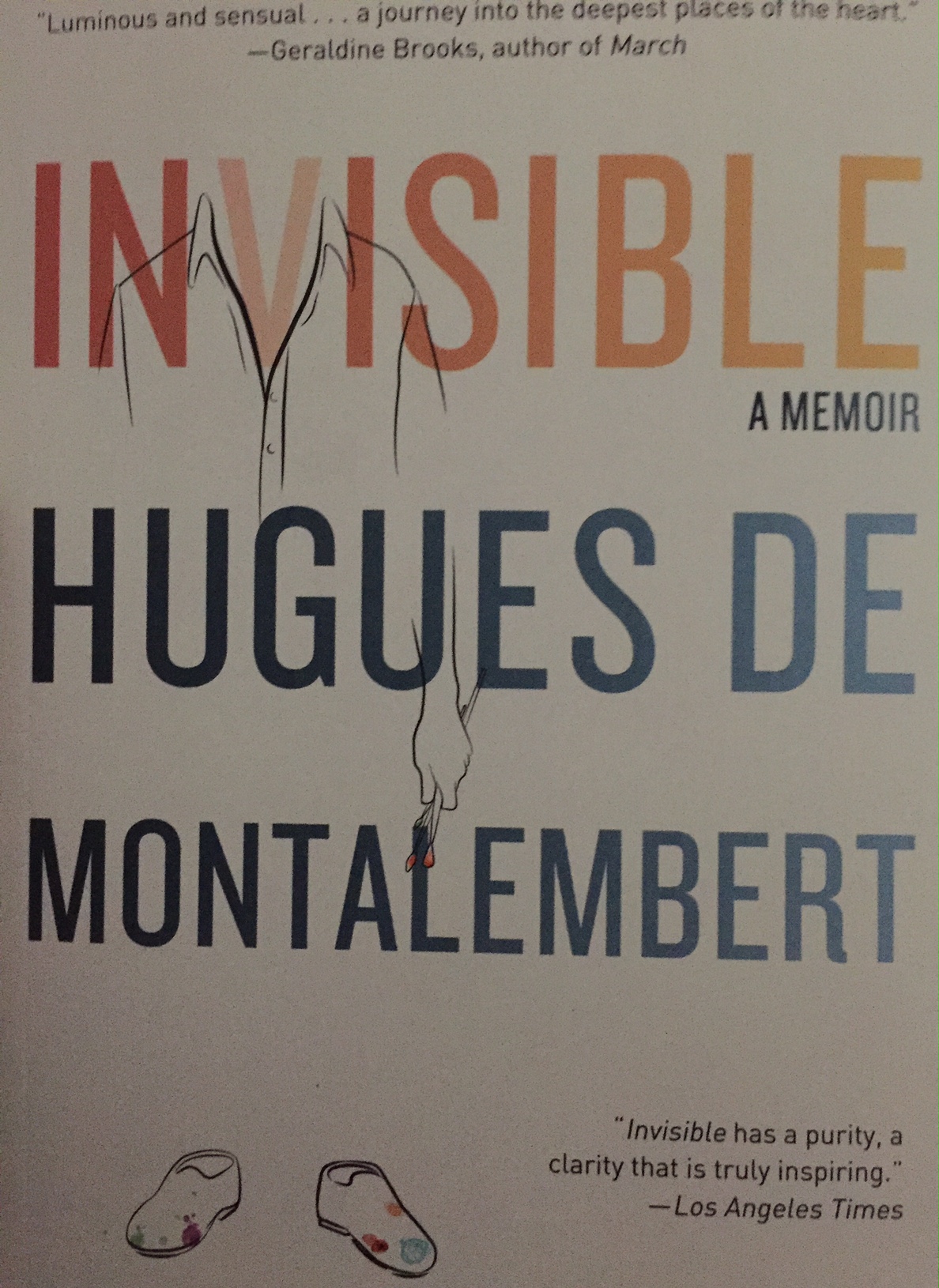
Invisible Book
Invisible: A Memoir by Hugues de Montalembert

Sight, like all senses, is seldom savored except in its absence. What it means to go suddenly and inescapably blind is the subject of Invisible by Hugues de Montalembert. One night Hugues loses his sight at the hands of criminals who invade his home. A painter and filmmaker, Hugues wakes in a hospital the next day to find he’s bereft of the sense most useful to him as a visual artist. Almost as though it’s trying to compensate, his brain tries to replace the lost vision with images cobbled together from memory and the faintest of visual stimuli. Even when sight is diminished to nothing, our minds seek meaning from the glimmers between shadows. But when despair would strike, a darkness of the mind clouded everything. I got the sense it was the inner confrontation rather than the external limitations on the physical senses that zapped the bulk of de Montalembert’s energy as he works to recreate his changed life.

Searching for meaning is as core a part of this book as it is a core part of human life. The searching takes on a different character and urgency as a result of the sudden blindness, but the search itself is universal. We are either helped or hindered by the personal resources we have to invest in the search, as well as the energy we put in. When we bump up against boundaries and limits that discourage us, we have to seek a way to overcome them. Hugues fights fiercely for independence and pushes the limits imposed by caregivers, medical experts, blind peers, and his own psyche. His struggle may echo setbacks we’ve experienced and from which, even though we may recover, we are never the same again. And nor would we spend much time desiring that if we want to improve our situation. Pragmatism wins out to prevent emotional collapse.

Ultimately, it’s a radical move that saves the author. He travels across the world alone. Never more fearful, he departs his home to see the world from his new vantage point. Venturing into the unknown, the known comes into sharper relief. Ingenuity comes out of necessity. Learning goes faster because the hurdles come quicker with no hiding place or comfort zone to retreat to. The author describes writing so long his pen runs out of ink and of course he doesn’t know it when it happens. He writes a whole day with no ink. He has nothing to show for his day’s work, but he had written the words and formed the thoughts by his own hand. Writing it is, even if no writing is left behind.

What constitutes “seeing” and what constitutes “not seeing”? “Vision is a creation,” Hugues writes. Based on that, the meaning of seeing remains invisible and we can only know it when we see it – when we see. Not so with not seeing. Seeing only what is readily apparent at first sight is the same as not to see.
Pro Programming

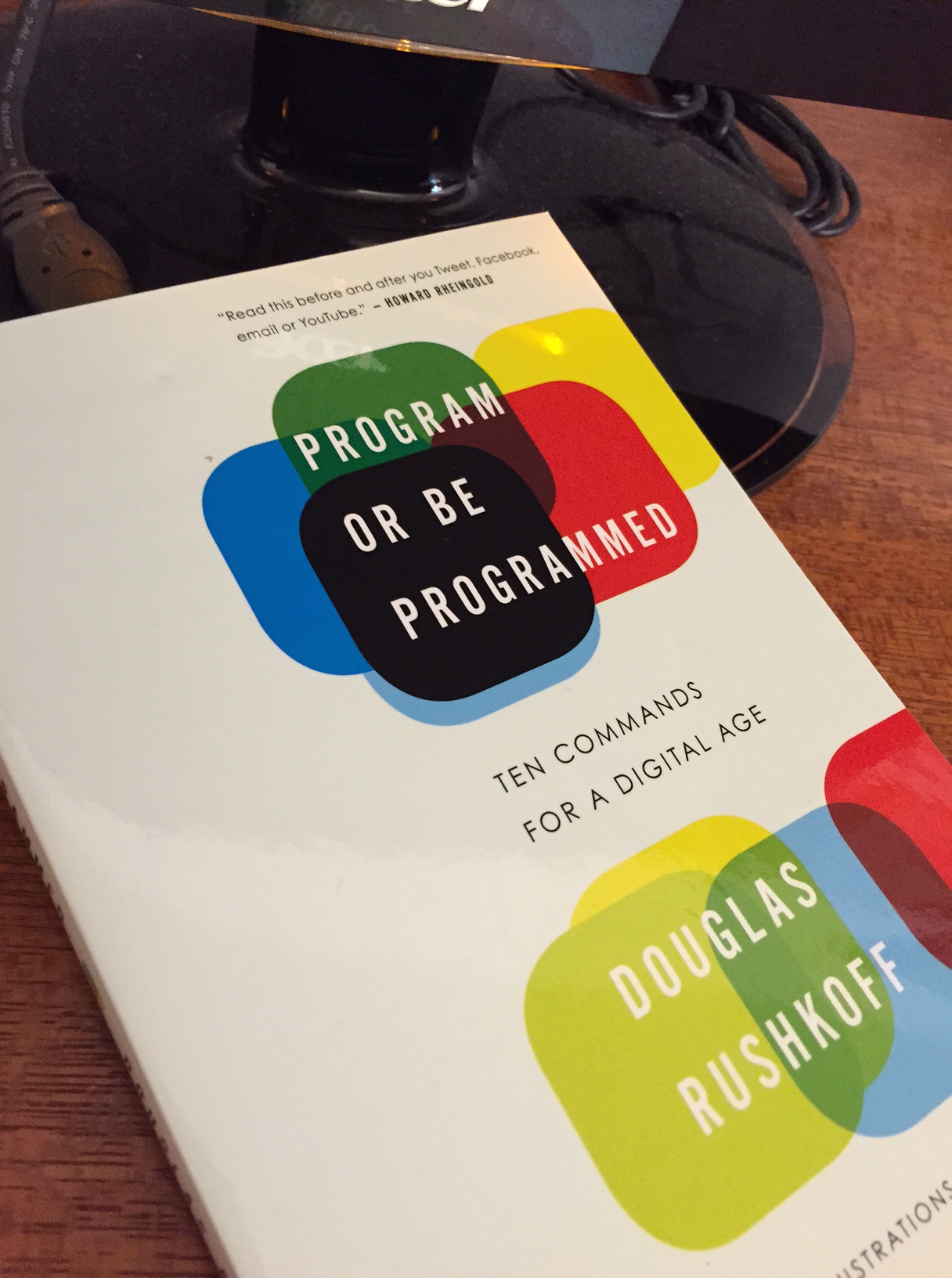
Analyzing the book Program or Be Programmed: Ten Commands for a Digital Age by Douglas Rushkoff
Program or Be Programmed by Douglas Rushkoff
Program or Be Programmed: Ten Commands for a Digital Age by Douglas Rushkoff

Computer literacy is a prerequisite to full participation in digital society. In Program or Be Programmed, Douglas Rushkoff explains why mere computer skills aren’t enough to become a shaper of the future we will live in, or even to influence the present shape of things as they are today. Our lives run in part according to processes and systems driven either wholly or in large part by the way in which software is designed. In both subtle and obvious ways, the choice architecture underpinning processes we participate in every day is guided by unseen hands that programmed how they would work. This happens every time an automated resume screening tool parses data and sifts through applicants before their submission makes contact with a human. It happens when the store of our choice (online or physical) decides what targeted discounts to pitch us for our next visit. It also happens when an algorithm determines search results or when its not-so-distant cousin offers up the next potential life partner or sex buddy via electronic matching services.

None of this is arguably good or bad, but someone’s deliberate thinking made it so. Programs function the way they do by someone’s design. Some of the consequences are intended, while a great many of them aren’t. We can either passively live at the mercy of these important, living operating systems or we can actively shape their design ourselves. But to shape them, we must learn to program or learn enough about programming to influence what gets programmed by others.

One step we can take besides sitting down to learn Python, C++, Swift, or Ruby (which certainly doesn’t hurt) is to study the values of the age of programming. By doing so, we can reset some of the terms by which we live our lives and determine the extent to which technology influences us, our habits, and our value systems. I’ll only focus on a couple here, but all ten of those Rushkoff discusses in Program or Be Programmed are worth considering.

Choice

Digital programs often force binary choices that implicitly limit choices where no such limitation truly exists. Rushkoff rightly points out that we often have a much broader array of choices than the program, bounded by the imaginary limits of its author, offers. And, even more powerfully, we have the power not to choose at all. We can decline a false choice about even such fundamental notions as race, gender, age, political affiliation, or religious belief. Our choices are of our own choosing and need not be determined by programming not of our own making.

Identity

Anonymity comes easy on the Internet. I can present the mask I want people to see. This can cut us off, Rushkoff warns, from being fully present in so much interaction that takes place via digital media. It’s easier to depersonalized and distance myself from the human impact when I don’t face the person. I must claim my identity and bear it openly for my digital communication to mean anything. “Nothing is perfect unless it is personal,” G.K. Chesterton once wrote in The Everlasting Man. Perhaps nothing is perfectly personal, but it must be personal to mean something.

Perhaps an Intention

Humans are the only creatures we know of that participate in their own evolution as a species. Can we do less than participate fully in the design of the programming that shapes the evolution of our culture? Can we do less than apply our personal understanding of the range of choices that ought to be part of the future humankind builds? Can we not see that to get on with programming ourselves is preferable to going along with the program?

Cathedral Builders

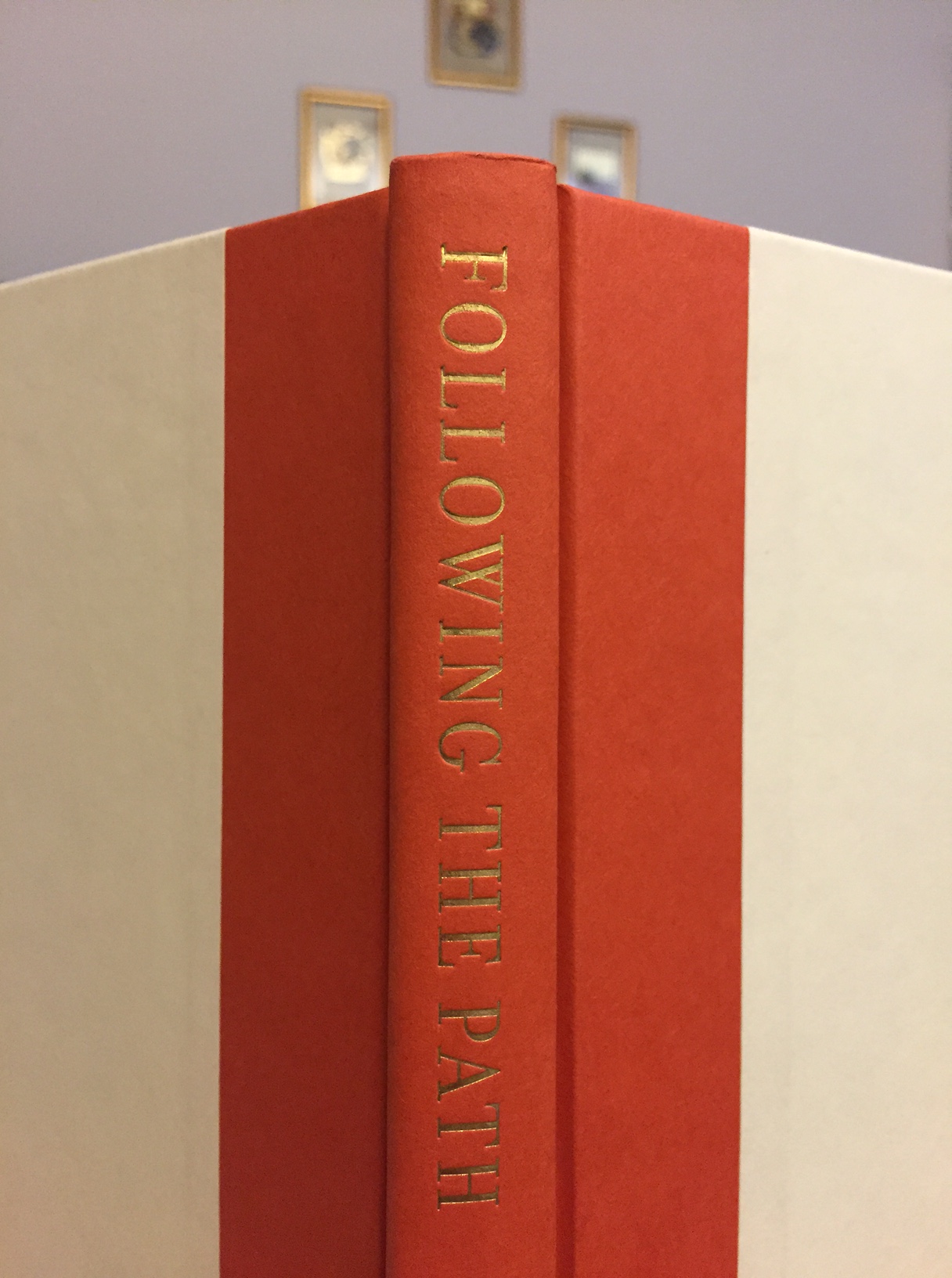
Reflecting on Following the Path: The Search for a Life of Passion, Purpose, and Joy by Joan Chittister

Vocation is an outworn word. Modern day career counseling doesn’t really include notions like “having a vocation” or “finding a calling” anymore. There’s talk of matching skill sets to career paths or making sure your job search leads to a position with a good fit. From the sound of things, it has more in common with trying on clothes or cramming yourself into a mold as gently as possible. This isn’t what spending your finite energy to do your life’s work is all about.

Following the Path: The Search for a Life of Passion, Purpose, and Joy by Joan Chittister

To say each of us has certain gifts we can offer our brothers and sisters isn’t the same as saying we have “skill sets.” No, gifts retain the ineffable quality of their transcendent origin in the divine. Gifts come with a responsibility to place them at the feet of one another – to offer them up in service. Skill sets are simply purchased at the price of the sweat of our brow, having earned them by patient practice and dogged persistence. Both have their place and their usefulness, but only gifts give us purpose as well as productivity because only gifts call forth what is silently written on our hearts in secret intention. To puzzle out the intent behind our lives and gifts is one of the great joyful confusions we have in our time on this earth. To turn aside from discovering the hidden graces offered by the embracing of our gifts is to refuse the measure of divinity poured out upon each of us in a unique, irreplaceable way.

What Joan Chittister points the way toward in Following the Path is the commitment to do what it is in us to do. We do it with the courage not to quit when the resistance is most acute and the despair is most severe. That is precisely the time to connect with the essential core of who we are, remember what we stand for, and insist on a life’s work that is congruent with our most deeply held values. This is how we ought to approach the question of how to spend our time and how to encourage those we love to follow their own path specific to them.

We are called to be more than good workers. We are called to be cathedral builders. We fashion out of the fabric of our lives a tapestry of stories. Some are woven of adventure, some of tragedy, and still others of profoundly blissful comedy. What they all must be is grand tales of giant proportions. No petty drama or small-scale farce will grace the stage of life we act upon. The work we do and the life we live must be grander than that. We build monuments, not statues. We build cathedrals, not huts.

Sea Sharp

The Rime of the Modern Mariner by Nick Hayes
Reflecting on The Rime of the Modern Mariner by Nick Hayes

Elemental forces seldom play the towering role in our lives that they did for the people of antiquity. Nature looms less large in a hi-tech society where people relate more to information than to space. We think more in terms of data than geography now. After all, ideas traverse the globe more swiftly than weather or disease does. Identity theft is a catastrophe more likely to be visited upon us than an earthquake, tornado, or fire.

The Rime of the Modern Mariner makes clear the peril we are in by living so estranged from nature. Like love, we may take it for granted while it slowly ebbs away and leaves behind a gaping canyon within us. As the mariner seeks to drag the effete divorcee from his perch of complacency, so it seems does Nick Hayes grapple with readers to haul us back to our senses.

The confrontation of note, though, is not between the mariner and the divorcee, but rather between the mariner and death. Death redeems him. Death descends in the form of the innocent albatross slaughtered on a whim, the swirling seafaring garbage piles, and the sticky sheets of poisonous petroleum goo. It visits upon him not a ghastly vision of what could be, but the horrible truth of what is. It suffocates him in guilt as men have strangled Mother Nature. But unlike the sleep of death, the mariner wakes from the slumber that comes upon him. And such is the hope of the author for the reader I think. There is a note of hope in the image of life that emerges that humans allied with nature can undo what humans have wrought against it.

Alas, to live estranged from nature is to live estranged from our human nature. When we live apart from the natural world, we tear ourselves apart. As vividly as Nick Hayes has depicted the wrenching of the old mariner’s soul, so do we rend the sinews that knit our bones when we decouple from our link to the whole of creation. We will heal with nature or we will burn with it. We will rehabilitate the environment we inhabit or we will perish in its ashes.

Doubt Faithfully

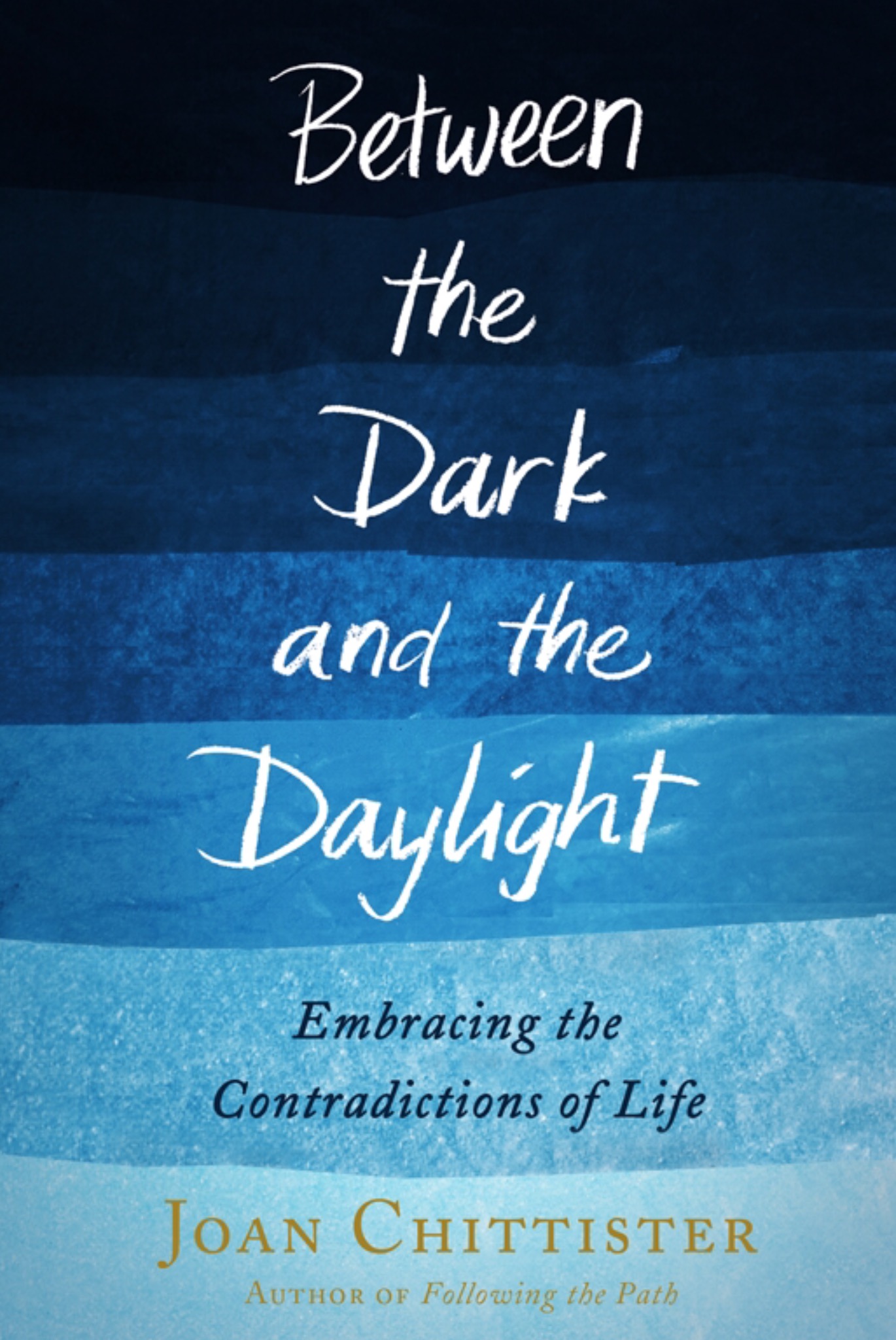
Reflecting on Between the Daylight and the Dark: Embracing the Contradictions of Life by Joan Chittister

Paradox and contradiction permeate life. That which we need for growth in the spiritual life is nearly always uncomfortable or disconcerting. When life knocks us off-balance, we ultimately find a surer footing and a deeper harmony as a result. Most of us want to avoid these situations, but we strive against that impulse, push outside our comfort zones, and aim for expanding our horizons despite the temporary growth pains. In a series of short chapters, Joan Chittister illuminates this paradox among many others we encounter on life’s spiritual journey. A perfect companion for Lent, this volume is magnetic in its simplicity. Sketching the contours of each contradiction, Joan’s reflections remove some of the fear we feel in these situations and grant us a share of her courage.

Between the Dark and the Daylight: Embracing the Contradictions of Life by Joan Chittister

Doubt isn’t something that usually shows up in any list of important virtues. Neither is uncertainty. Chittister challenges us to see these “negative” perspectives as something more than things to be overcome. Rather, they are to be embraced. Before knowledge, she would argue, comes confusion. The mind becomes clouded before the clouds can lift to reveal the light of understanding. There is no arrival at one’s destination without the first unsure steps. Those steps aren’t something to hurry through or get over with as quickly as possible, but they’re to be actively experienced for what they are if we want to drink fully the marrow of life.

Darkness haunts all of us in terribly personal and individual ways. None of us have the same sins, vices, or transgressions against others. We run from our shadows. They frighten us all the more for having our shape. Evil, it seems, is as particular as goodness. Acknowledging and relating to the shadow side of the self affords us opportunities for change. Joan’s descriptions of this change, though, bring out the quality of conversion of heart. We often think of life-changing experiences as moments of clarity, religious visions, or dramatic experiences that alter our lives in a single instant. While these types of changes do happen, most change is gradual. It takes place incrementally over the course of days, months, and years. Rooted in the heart, these changes are no less important for their gradual evolution over time. In many cases, we make more diligent spiritual progress by faithful repetition and loving discipline than by trying to artificially generate ecstatic leaps forward. Enlightenment happens on God’s terms not on ours.

Anyone who meditates or practices a form of contemplative prayer understands this firsthand. It isn’t always doing but sometimes not-doing that moves us further along the way. Indeed, the whole concept of a set path or a defined distance we must travel to God collapses when it becomes clear that life isn’t linear at all. We connect to people, ideas, and the natural world in a web of strands – each having its own purpose, leading where it must go, and holding for a moment the will of the Divine for us. Some of these connections will outlast us and others may not, but they’ll have served their purpose and thereby served us well in any case.

Some questions never resolve themselves, not in this life anyway. The discovery Joan helps us make, and it is one I feel I must continually rediscover year after year, is that this is how it should be. We haven’t failed in life if questions persist. Anxiety, like the poor, will always be with us. There’s nothing wrong with not knowing the answers to life’s deepest questions beyond the shadow of doubt. The only problem is when we cease to ask them altogether.

Love Dangerously

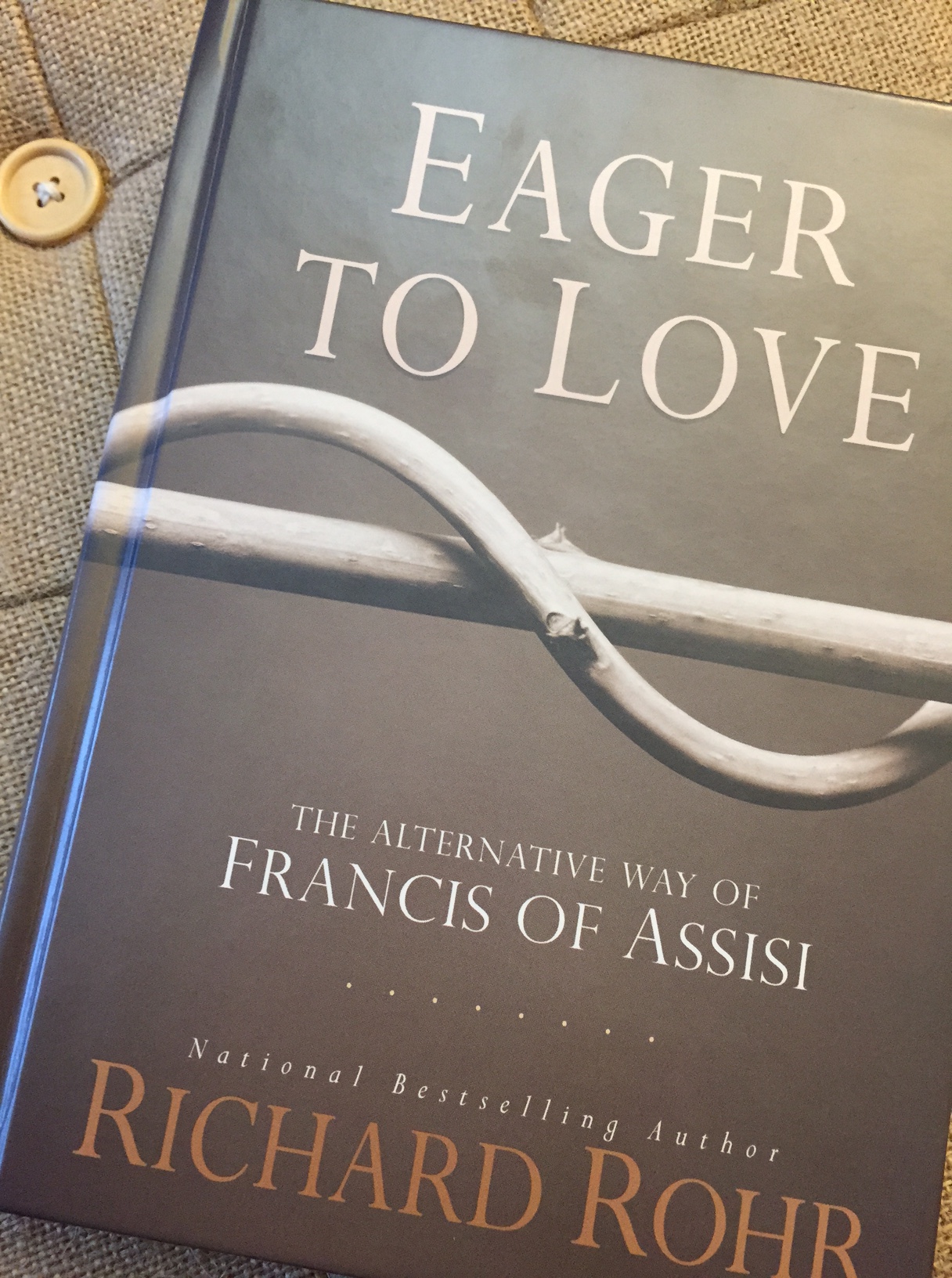
Reflecting on Eager to Love: The Alternative Way of Francis of Assisi by Richard Rohr

In an age with dating services like Ashley Madison, people seem to crave love, sex, and intimacy without risk. And yet, to love someone without the willingness to risk anything is a shriveled and shrunken kind of love. To love without risk to the self is not only cowardly, but not really even love at all. If love involves placing another before oneself, this kind of self-centered love that characterizes our age is more akin to mutual vanity – like two people sitting across from one another, each looking

Eager to Love by Richard Rohr
Eager to Love: The Alternative Way of Francis of Assisi by Richard Rohr

in a mirror. The illusion of mutuality is there, but love is surely not.

Nothing could be further from the love that shone forth from St. Francis. His was a love that took vulnerability to a level of Christ-like magnanimity. So overflowing and energetic was his love that I think it would be difficult for us moderns to recognize it. If exhibited today by a stranger or even a friend, we might mistake it for something contrived. Certainly, we would think, such love as this is much too raw to be real. It’s too faithful to be believed. It can’t possibly be authentic. Such is our depravity that we would mistake the naked face of love for a mask.

Richard Rohr does a tremendous job bringing the texture of Franciscan love alive for the contemporary reader. Rather than use Francis as a prop for some social or political thesis, Rohr places Francis before the reader and then surrounds him with the people, concepts, images, and experiences that all bear the mark of this saint’s particular manner of living. St. Bonaventure, John Duns Scotus, Pope Francis, and St. Clare contribute to Christianity in no small way and in no way without their relationship to Francis. Each influenced and was influenced by the Franciscan spirit. Francis’s way of relating to God through contemplation and simplicity constitutes less of a “path” or spiritual school of thought, and more of a disposition of heart.

The Franciscan way of downward mobility runs counter to notions of success in society as much in this age as in the age in which Francis lived, but Francis and his spiritual partner, Clare, resided outside systems and inside an ethic of service. The gift of their poverty was generosity. The more they renounced, the more they had to bestow. St. Francis and St. Clare together transcribe the teachings of Jesus, not with ink but with action. It always seemed odd to me that St. Clare would serve as the patron of television, a medium for which I always thought she’d have little use if she were alive today. Now I think that it’s the fact she’d have no need of it that makes her its perfect patron. Like love, it’s best when a screen isn’t something we turn on so as not to feel alone. Like love, media serves us better when it’s something we don’t consume lest it consume us in the process. Like love, it serves a higher aim than self-stimulation or it only serves to diminish oneself.

Love is never holy as an abstraction alone, teaches Francis. When he addresses the cosmic Christ, he does so as Brother Sun and Sister Moon; Brother Wind and Sister Water; Brother Fire and Sister Bodily Death. In doing so, he brings home the specificity of the holy. Nature doesn’t water down divinity to the Franciscan because it isn’t general, but richly painted in vivid detail and bursting with a radiant individuality. Holiness is naturally no less specific for being shared, just as God’s love is no less passionate for it’s being poured out equally upon all people. As Rohr says, “Religion’s primary and irreplaceable job is to bring this foundational truth of our shared identity in God to full and grateful consciousness.” It’s impossible not to hear this statement as a challenge to all contemporary religious leaders who, in an effort to exercise influence, sacrifice love on the altar of orthodoxy.

Modern Western men and women are eager to love in many ways, but lack of a true conception of what loving means leads them astray. Francis reminds us that even a true concept of love isn’t enough, as the truth of love bears itself out in the living of it. Love is embodied or it ceases to be. Love demands Incarnation. Is it no wonder, then, that the Christian tradition owes so much to the Little Poor Man of Assisi?

The Journey Begins

book blog stack

Books figure prominently in my life. And not because bookcases take up half my living room and outnumber all other furniture. They’re the window into other worlds and into vaster experiences than one human being could possibly glimpse any other way. As a result, they’ve always been an obsession of mine. Whether religious writings, political history, sci-fi novels, or business books, I constantly cycle through an endless stream of varied literary adventures. And like all good adventures, they’re better when you share them with others.

That’s the purpose of this blog. I’ll get a chance to share with you some of the places I’ve seen, some ideas spawned by the imaginations of others, and any insights that leap from the printed page to inspire this humble reader with a keyboard and the urge to type. Come with me.