Customer Service from Hell

Incorrect Password

For anyone who’s ever had a hellish customer service experience, this is a story for you. You can think of it as a mini tribute to the overworked customer. We’ve all been there at one time or another. We get a product as a gift or sign up for a service. Everything seems to go great at first. Then, disaster strikes. The product fails, the service isn’t what’s expected, or some completely unrelated event renders our purchase unusable. You’re forlorn, left adrift. There’s nowhere to turn. Then it dawns on you that there are people – a whole group of them – who’s sole purpose of existing is helping you navigate the very type of predicament you find yourself in now. They are customer service. You reach out to them, and boy does it not go well.Customer_Service

Benoît Duteurtre plumbs the maddeningly terrible depths of customer service failures in this crisp, hilarious yarn. Our hero in this tale is a decidedly technophobic individual who briefly overcomes his technophobia to embrace his parents’ gift of a smartphone. He is rewarded for his bravery and tolerance with the unfortunate luck of losing his new phone. From there, his life becomes consumed with battling the corporate minions that appear determined to place every obstacle possible between him and accomplishing the goal of replacing his phone. From hold music to internet cafés to waiting rooms to plane trips, the runaround by customer service has him running all over.

This book is more rant than rumination, but it’s fun and relatable. Read this story and it probably won’t change your life. It won’t change your opinion about customer service or the role of tech gadgets in modern life. But I can guarantee you one thing: you will never forget the name Leslie Delmare.

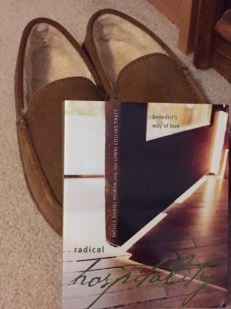
Radical Hospitality

St. Francis Church New Mexico

At its most basic, hospitality means saying “welcome in” to the friend and the stranger alike. This doesn’t mean you share the same intimacy with a stranger as with a friend. It only means you’re open to and grateful for the gift of discovering what any person has to offer no matter who they are. Father Daniel Homan and Lonni Collins Pratt unpack the virtue of hospitality and what it means today in Radical Hospitality: Benedict’s Way of Love. Their interpretation flows from the monastic spirituality of St. Benedict, who in his Rule of St. Benedict set the expectation that monks extend hospitality to others. Hospitality is for everyone, not just monks. While hospitality has become associated with hotels, tourism, and the business of keeping people entertained, the authors explain that it is about relationships. Hospitality expresses itself in relationships that start with gratefulness for the gift of encountering someone else instead of mistrust, suspicion, or – worst of all – the desire to use another as an instrument to our ends.

Radical Hospitality Homan and Pratt
Radical Hospitality: Benedict’s Way of Love


Stories abound in  holy texts, especially those passed on by desert people (like the Bible or the Qur’an), of the importance of hospitality. It was a life or death matter for travelers in earlier eras. And in many parts of the world or in the case of refugees fleeing their home countries, it is still a matter of life and death today. Even outside of these dire circumstances, the spirit of hospitality calls us to a more authentic way of relating to each other. We can choose to see in other people a grace that we admire, a skill we share, or a virtue we seek. So often when we search for the good in others, we find it in ourselves. When we focus on the evil, it appears in us too. Perhaps in learning hospitality toward others, we learn to live with ourselves. We learn to accept our faults when we can more tolerably overlook the faults of our fellow travelers. Through hospitality, we learn the courage to be kind – both to ourselves and those very different from us.

Even as we create a more technologically advanced world, we need to make it hospitable. We need to make it a fit place for spiritual beings to reside in. Sending an email, joining a video conference, or posting on someone’s website are the new ways we sometimes welcome others into our home or enter as strangers into someone else’s. Technology makes us more accessible to each other through communication tools. Consequently, we have to make sure that when we access each other we do so in a way that is humane and hospitable. Sending and receiving information has never been so easy, but it has probably never been so difficult to maintain the level of hospitality required. I am grateful to Homan and Pratt for the depth of their study of hospitality and the accessible way in which they communicate it in Radical Hospitality. At its most basic, hospitality means saying “welcome in”- easier to say about your house than about your heart.


Popular Genius

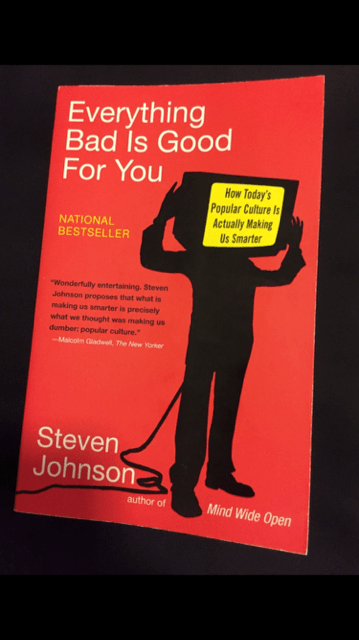
Everything Bad Is Good For You

Contrary to popular belief, popular culture isn’t dumbing down concepts or reducing us to piles of mashed couch potato. Television programs and video games engage modern audiences in ways that deepen cognitive capacity. Steven Johnson writes, “The story of the last thirty years of popular culture is the story of rising complexity and increased cognitive demands.” Everything Bad is Good for You is a heartening take on popular culture that runs counter to accepted wisdom. People have long argued that modern games and media are both riddled with sex and violence, and devoid of edifying content. Not so, claims Johnson. In one illustration, Johnson maps out the family tree in the show Dallas and compares it to intricate web of characters and families in 24. It’s not even close how much more complex the interlocking relationships of 24 are. When it comes to plot, there might be layers that are introduced and go unexplored for a few episodes before they are brought back again as crucial elements. Often modern shows will pick up the thread instantaneously without explanation or preamble and viewers are expected to follow nimbly along.

Everything Bad Is Good For You
Everything Bad Is Good For You by Steven Johnson

Johnson goes out of his way to point out that not all TV shows and video games are alike. While many of the award-winning titles that media critics decry as slop do enhance our cognitive powers, others provide empty calories. It isn’t a particular format, like cable drama or reality show, that makes the difference. Rather, it’s more about the complexity of the personalities, plot developments, and volume of interdependent threads of the story that makes the difference. One can make an expertly crafted police drama or an intellectually impoverished documentary. The cognitive payoff depends on the investment the creator demands of the audience.

The same holds true for video games. Often derided as a time-wasting activity, Johnson argues that many games make their players smarter. He contends that games are actually an incredibly practical way of learning the scientific method. Players don’t just passively absorb the plot or unfolding levels of a good game. Players probe, explore, hypothesize, and experiment their way to success. They have to learn the physical and social laws of new worlds. They have to test and retest boundaries. They have to interpret the results and make consequential choices based upon their interpretations. They get real-time feedback about when they have guessed rightly or wrongly. Sometimes it’s not even clear what the expected outcome of a game is or what success actually looks like. You have to figure that out for yourself as you go. What better preparation for life as a 21st century knowledge worker could there be?

Young Money

Young Money Book

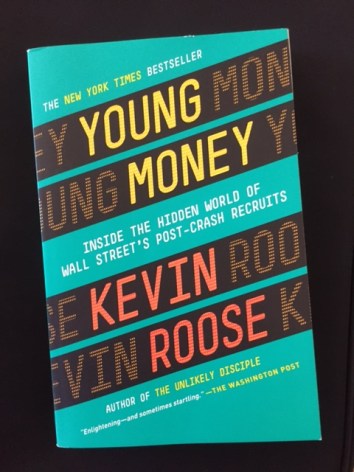
Perhaps more than any generation before us and certainly no less than any other, millennials seek work imbued with meaning beyond a paycheck. The aspiring young financiers profiled in Young Money: Inside the Hidden World of Wall Street’s Post-Crash Recruits aren’t exceptions to that. Sure, they seek power, status, accomplishment, access – and, of course, money. But for most of them these things don’t win out over the inescapable emptiness they find in the dismal labyrinth of Excel spreadsheets that is the life of a young analyst on Wall Street. In many cases, they have reached the pinnacle of post-graduation success only to find a winding staircase of further obstacles and challenges that leads to yet grander heights of worldly success. In the end, they’re less afraid of the failure to reach those heights than the emptiness awaiting them in the corner office.

Young_Money

Kevin Roose brilliantly dissects the Wall Street recruiting machine. He exposes the process that leads directionless overachievers down a well-travelled road to material riches. The road serves as a sort of “cashing-in” on their abundance of talent, ambition, and fear. Many start out having drunken the Kool-Aid that they are somehow serving the wider good of society, rather than fueling a financial engine that allows the vast corporate empires they work for to amass more wealth and enrich those at the highest rungs of the corporate ladder. Others admit full well the moral compromises their work involves, but they crave the money to pay off their student loans quickly and the chance to learn skills they might transfer to the work they want to do later. Sometimes that works out, but for many later never quite arrives.

Probably the best part about this book is the sympathetic portraits Roose writes about his young up-and-coming subjects. He’s both sensitive to and objective about their efforts to reconcile the inclination to achieve with the yearning for purposeful work. Having entered the workforce post-recession, this generation of recruits clings to the security of an established foothold of economic power, while at the same time acutely aware of both its moral precariousness and vulnerability to hubristic collapse. Even as the harried young financial footsoldiers pull themselves back and forth to the office (when they do indeed leave it), this awareness induces a chronic psychological strain. It’s a tough thing to watch the best and the brightest mortgage their souls like that. It makes you wonder about those on the other side of the trade. And it reminds you of the peace we all have to make with how we choose to spend our time on this earth.

Nuns Rule

Forget what you think you know about nuns and the role of women in the Catholic Church. Jo Piazza’s If Nuns Ruled the World: Ten Sisters on a Mission serves up ten profiles in courage that will alter your perception of Catholic religious women. Leaders and activists, the American women Piazza profiles exemplify what it means to live out a commitment to social justice. Piazza shines a spotlight on the way each of these unique women carves out a niche within which she makes a remarkable contribution to the Church and the whole of American society.

Nuns_Ruled_World

To take one example, Sister Jeannine Gramick advocates for gay rights, including gay marriage. Often exposing herself to criticism and reprimands from other Catholic leaders, Sister Jeannine promotes dialogue, outreach, and advocacy for a more inclusive Church and society that embraces gay men and women in the totality of who they are in relationship to one another. The seedling of her calling to this mission grows from meeting a handsome gay man at a party one night. What then starts as a home ministry blossoms into a full-blown organization, and eventually multiple organizations. Sister Jeannine’s courage to promote gay rights and establish a connection to and from a Catholic community from which gay people have been alienated is, for her, all part of the Christian mission to bring God’s children together in love.

Sister Tesa Fitzgerald founded Hour Children to help women in prison connect with their children while they serve out their sentences.  Sister Simone Campbell assumes the unenviable task of taking Catholic social justice issues to the sources of America political power. Meanwhile, Sister Nora Nash bellies up to power brokers of the corporate variety as an activist investor of sorts. What they all have in common is the capacity to defy any stereotypical or popularized version of what it means to live their vocation as religious women. They have chosen to model self-gift. By taking their individual gifts and gifting them back to a culture in which they often represent the counterculture, they have shown us a way of Christian living as old as Christianity itself.

As individuals working independently and as kindred spirits working collectively to shape a more inclusive America, the nuns profiled in this book give witness to living a contemplative life that is active in the world. They are examples of modern heroism and evidence of the spiritual riches that come from meaningful work. They may not generate the kind of wealth that accrues on balance sheets, but the value they create and the dividends they generate grow the common good.

The Journey Begins

book blog stack

Books figure prominently in my life. And not because bookcases take up half my living room and outnumber all other furniture. They’re the window into other worlds and into vaster experiences than one human being could possibly glimpse any other way. As a result, they’ve always been an obsession of mine. Whether religious writings, political history, sci-fi novels, or business books, I constantly cycle through an endless stream of varied literary adventures. And like all good adventures, they’re better when you share them with others.

That’s the purpose of this blog. I’ll get a chance to share with you some of the places I’ve seen, some ideas spawned by the imaginations of others, and any insights that leap from the printed page to inspire this humble reader with a keyboard and the urge to type. Come with me.