Young Money

Young Money Book

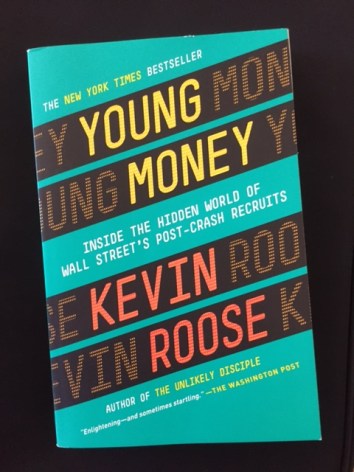
Perhaps more than any generation before us and certainly no less than any other, millennials seek work imbued with meaning beyond a paycheck. The aspiring young financiers profiled in Young Money: Inside the Hidden World of Wall Street’s Post-Crash Recruits aren’t exceptions to that. Sure, they seek power, status, accomplishment, access – and, of course, money. But for most of them these things don’t win out over the inescapable emptiness they find in the dismal labyrinth of Excel spreadsheets that is the life of a young analyst on Wall Street. In many cases, they have reached the pinnacle of post-graduation success only to find a winding staircase of further obstacles and challenges that leads to yet grander heights of worldly success. In the end, they’re less afraid of the failure to reach those heights than the emptiness awaiting them in the corner office.
Young_Money

Kevin Roose brilliantly dissects the Wall Street recruiting machine. He exposes the process that leads directionless overachievers down a well-travelled road to material riches. The road serves as a sort of “cashing-in” on their abundance of talent, ambition, and fear. Many start out having drunken the Kool-Aid that they are somehow serving the wider good of society, rather than fueling a financial engine that allows the vast corporate empires they work for to amass more wealth and enrich those at the highest rungs of the corporate ladder. Others admit full well the moral compromises their work involves, but they crave the money to pay off their student loans quickly and the chance to learn skills they might transfer to the work they want to do later. Sometimes that works out, but for many later never quite arrives.

Probably the best part about this book is the sympathetic portraits Roose writes about his young up-and-coming subjects. He’s both sensitive to and objective about their efforts to reconcile the inclination to achieve with the yearning for purposeful work. Having entered the workforce post-recession, this generation of recruits clings to the security of an established foothold of economic power, while at the same time acutely aware of both its moral precariousness and vulnerability to hubristic collapse. Even as the harried young financial footsoldiers pull themselves back and forth to the office (when they do indeed leave it), this awareness induces a chronic psychological strain. It’s a tough thing to watch the best and the brightest mortgage their souls like that. It makes you wonder about those on the other side of the trade. And it reminds you of the peace we all have to make with how we choose to spend our time on this earth.

Knights Rule

Written as a letter from a father, Ethan Hawke’s Rules for a Knight brings together the collected wisdom of sages as diverse as Peter Drucker, Nelson Mandela, Thich Nhat Hanh, and Julian of Norwich. Hawke surveys knightly virtues such as gratitude, courage, and discipline. What ties them together is the central story of a grandfather passing on wisdom to his children and the tight, unadorned prose he uses to capture his thoughts.

There’s a sense of respect and reverence that flows through these passages on chivalrous values. It’s a reverence for the virtues themselves and their role as the mortar of civilized society, but it’s a reverence also for the task of passing on knowledge from one generation to the next. The sacredness of this task is not lost on the father penning these pages. There is an awareness that to have lived the virtues is essential, but nearly as essential is to pass on the lessons of one’s life that are learned at the price of grief, pain, and sacrifice.

RulesforaKnight

A particularly choice example of this is when Thomas (the father and knight) tells the story of how he came to love the children’s mother. It’s one of the most honest and candid accounts of true love in literature I can recall. He contrasts it with the fairytale romance of “falling in love” that so many stories exemplify, often imparting a faulty understanding of love. Thomas contrasts love with passion and spells out the key difference by illustrating it with a love story from his own life.

One of the unexpected benefits of Hawke’s approach with this book is an awareness of how the lessons we learn in our own lives build on those our elders have taught us. Over time, we extend the wisdom we have received from others through our own experiences. In turn, we then build on what we learned by passing it on to those who will live after us to continue to extend this collective wisdom with their own life lessons. Rules for a Knight contains many essential truths, but none more essential than the duty to share the lessons of our lives with future generations.

Frontier People

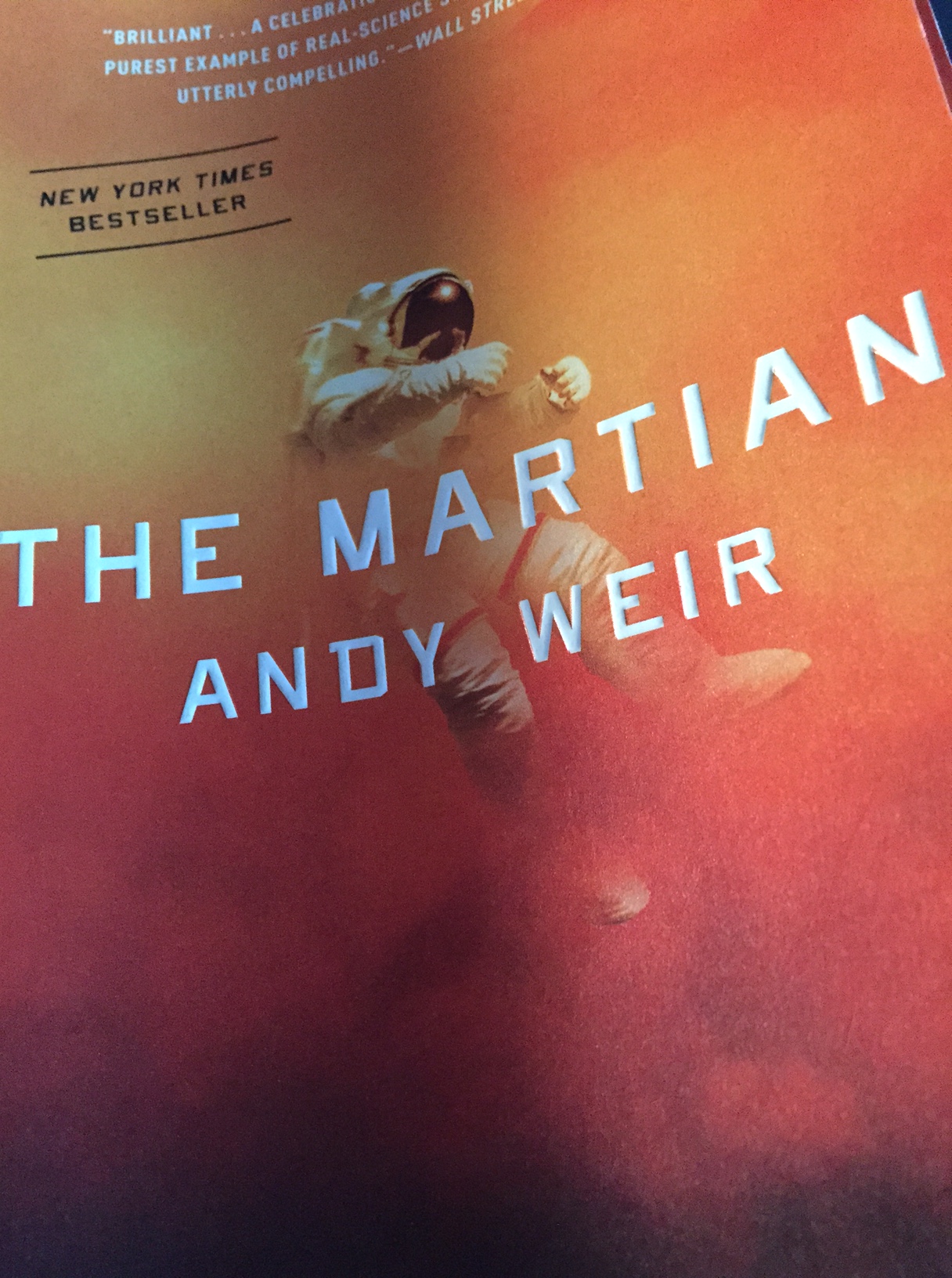
The Martian by Andy Weir

Something in the American spirit drives us to the frontiers. Even for the generation who came of age during the recent recession, frontiers draw them. For my generation that came of age during the Clinton era and landed in a jobless pit upon graduation, we still claim as our birthright the discovery of something new under the sun. But the sun is only the closest in a universe of stars, and discovery may happen under the sun or many moons away.

The Martian starts out as a journey of discovery into the heart of the unknown and turns into one man’s fight for survival on another planet with his own ingenuity, limited supplies, and no communication to his colleagues at NASA. His sense of humor keeps the reader entertained, but there’s a sense in which you know it’s also partly what’s keeping him alive. Beyond the survival instinct innate to all creatures, Mark Watney loves living, solving problems, and pulling off the impossible. He’s incredibly funny and likeable. He kind of makes you want to launch a startup and hire like 10 of this guy! A cool dude all around and a great hero for the kind of story where you need to be rooting for the man stranded on Mars for it to work.

Weir writes with incredible detail about the issues Watney encounters just trying to keep himself alive on Mars with what remains of the mission’s supplies, and deal with the boredom and daily mishaps – either one of which could kill him at any time. Tension builds throughout as the story shifts from Watney to NASA and back to Watney again. It builds in a way that isn’t forced and there’s enough movement to the plot that the “daily journal” format doesn’t get tiresome. In addition to the likeability of the characters and the author’s command of scientific detail, there’s something so authentic about the frontier spirit of this book. It harkens back to the days of Apollo when America did genuine space exploration that mattered and the American public felt captivated by it. As it continued, I couldn’t help but wish we could recover some of that spirit today. Instead of discretionary wars that accomplish little, as a country we could be expanding the horizons of our species by searching the wonders of the galaxy. Instead of bickering over budgetary minutia or hijacking antiquated parliamentary rules to grind politics to a halt, we could find purpose and pride in putting the best minds available to tasks that may one day lead to the first space colonies and a future for mankind among the stars.

Frontiers aren’t always boundaries we cross because there’s personal or political benefit. Sometimes we blaze trails into new territory because we have hope it will lead to a better world for our grandchildren, or simply because there was a mountain there that we felt in our bones needed climbing. It isn’t that we’ve set our sights too high in the 21st century that is the cause of our failure to thrive. It’s that we haven’t set them high enough. We’ve looked too long and too low at the quickest ways to make a quick buck and the fastest ways to make fast money. What we’ve left unattended is the worthwhile. We have neglected the old American staple – the impossible, irresistible dream of tomorrow. Watney’s genius – apart from mere intellect – is to be a pioneer every day with the confidence a new tomorrow will be there to greet him. That is his reward and the only prize he seeks. Like he and his fellow explorers, we are a frontier people. We can be one again.

Sight Unseen

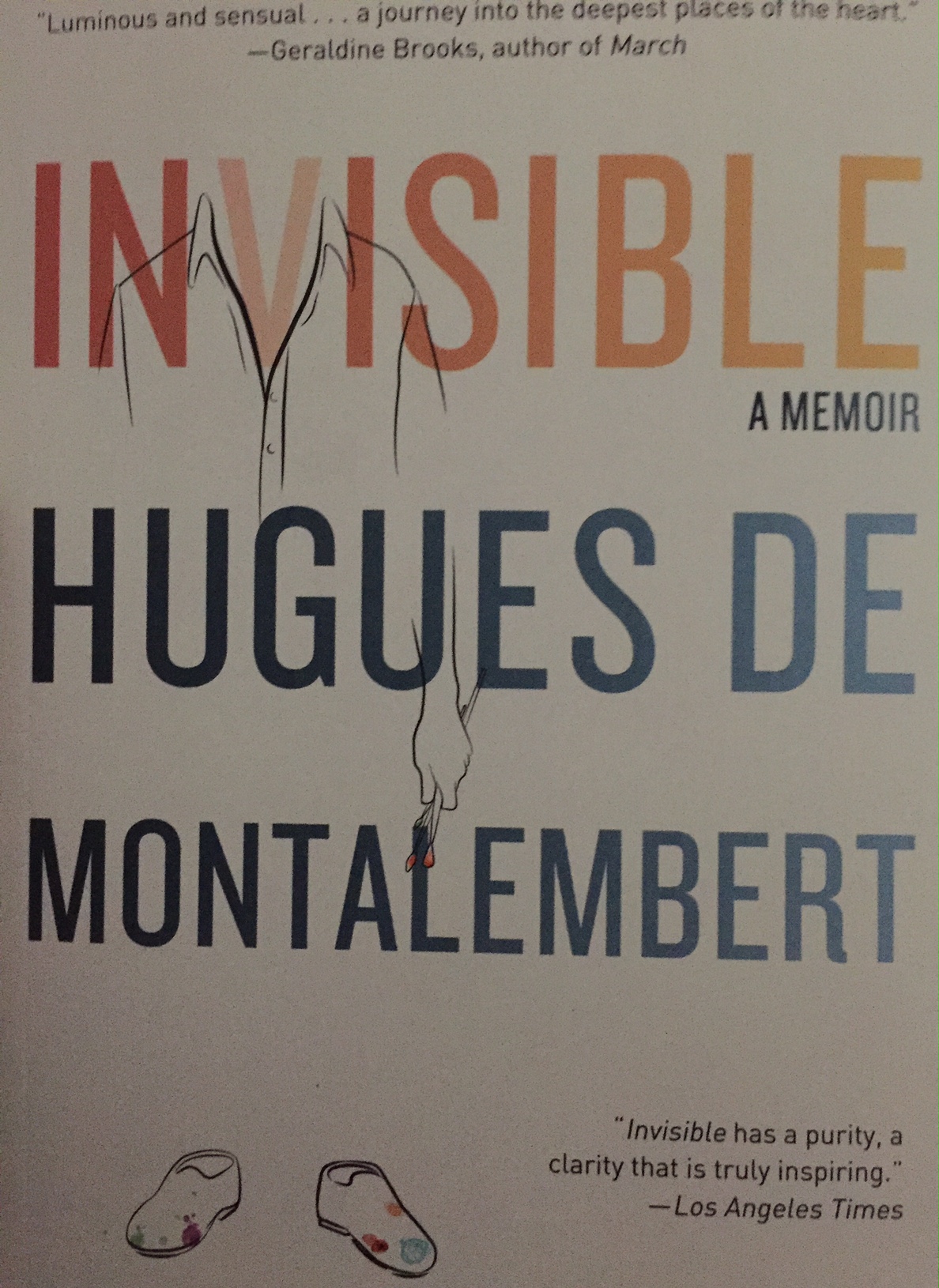
Invisible: A Memoir by Hugues de Montalembert
Invisible Book
Invisible: A Memoir by Hugues de Montalembert

Sight, like all senses, is seldom savored except in its absence. What it means to go suddenly and inescapably blind is the subject of Invisible by Hugues de Montalembert. One night Hugues loses his sight at the hands of criminals who invade his home. A painter and filmmaker, Hugues wakes in a hospital the next day to find he’s bereft of the sense most useful to him as a visual artist. Almost as though it’s trying to compensate, his brain tries to replace the lost vision with images cobbled together from memory and the faintest of visual stimuli. Even when sight is diminished to nothing, our minds seek meaning from the glimmers between shadows. But when despair would strike, a darkness of the mind clouded everything. I got the sense it was the inner confrontation rather than the external limitations on the physical senses that zapped the bulk of de Montalembert’s energy as he works to recreate his changed life.

Searching for meaning is as core a part of this book as it is a core part of human life. The searching takes on a different character and urgency as a result of the sudden blindness, but the search itself is universal. We are either helped or hindered by the personal resources we have to invest in the search, as well as the energy we put in. When we bump up against boundaries and limits that discourage us, we have to seek a way to overcome them. Hugues fights fiercely for independence and pushes the limits imposed by caregivers, medical experts, blind peers, and his own psyche. His struggle may echo setbacks we’ve experienced and from which, even though we may recover, we are never the same again. And nor would we spend much time desiring that if we want to improve our situation. Pragmatism wins out to prevent emotional collapse.

Ultimately, it’s a radical move that saves the author. He travels across the world alone. Never more fearful, he departs his home to see the world from his new vantage point. Venturing into the unknown, the known comes into sharper relief. Ingenuity comes out of necessity. Learning goes faster because the hurdles come quicker with no hiding place or comfort zone to retreat to. The author describes writing so long his pen runs out of ink and of course he doesn’t know it when it happens. He writes a whole day with no ink. He has nothing to show for his day’s work, but he had written the words and formed the thoughts by his own hand. Writing it is, even if no writing is left behind.

What constitutes “seeing” and what constitutes “not seeing”? “Vision is a creation,” Hugues writes. Based on that, the meaning of seeing remains invisible and we can only know it when we see it – when we see. Not so with not seeing. Seeing only what is readily apparent at first sight is the same as not to see.

Sea Sharp

The Rime of the Modern Mariner by Nick Hayes
Reflecting on The Rime of the Modern Mariner by Nick Hayes

Elemental forces seldom play the towering role in our lives that they did for the people of antiquity. Nature looms less large in a hi-tech society where people relate more to information than to space. We think more in terms of data than geography now. After all, ideas traverse the globe more swiftly than weather or disease does. Identity theft is a catastrophe more likely to be visited upon us than an earthquake, tornado, or fire.

The Rime of the Modern Mariner makes clear the peril we are in by living so estranged from nature. Like love, we may take it for granted while it slowly ebbs away and leaves behind a gaping canyon within us. As the mariner seeks to drag the effete divorcee from his perch of complacency, so it seems does Nick Hayes grapple with readers to haul us back to our senses.

The confrontation of note, though, is not between the mariner and the divorcee, but rather between the mariner and death. Death redeems him. Death descends in the form of the innocent albatross slaughtered on a whim, the swirling seafaring garbage piles, and the sticky sheets of poisonous petroleum goo. It visits upon him not a ghastly vision of what could be, but the horrible truth of what is. It suffocates him in guilt as men have strangled Mother Nature. But unlike the sleep of death, the mariner wakes from the slumber that comes upon him. And such is the hope of the author for the reader I think. There is a note of hope in the image of life that emerges that humans allied with nature can undo what humans have wrought against it.

Alas, to live estranged from nature is to live estranged from our human nature. When we live apart from the natural world, we tear ourselves apart. As vividly as Nick Hayes has depicted the wrenching of the old mariner’s soul, so do we rend the sinews that knit our bones when we decouple from our link to the whole of creation. We will heal with nature or we will burn with it. We will rehabilitate the environment we inhabit or we will perish in its ashes.