Bearish Outlook

The Beaufort Diaries by T Cooper

Beaufort Diaries
The Beaufort Diaries by T Cooper

Horatio Alger this bear is not. It isn’t your great grandfather’s rags to riches story when a polar bear becomes a climate refugee and works his way through dead-end jobs as a cub laborer on fishing trawlers, eventually earning enough dough to go wing it in sunny Los Angeles. Having been an actor myself pursuing fame, fortune, and mostly just a way to make a living doing what I loved, the tale of Beaufort the polar bear doing the Hollywood hustle endeared itself to me at the outset. Despite the bad influences of Leonardo DiCaprio and Beaufort’s cokehead Icelandic girlfriend Svava, Beaufort maintains a down home sensibility forged deep in the Artic heartland.

Unfortunately, this sensitive soul of a bear gets ostensibly crushed under the mirage of Hollywood dreams. A familiar story of the downward spiral of celebrity plays out in an often engrossing and sometimes achingly uncomfortable way. Beaufort’s self-absorbed self-destruction has you sympathizing and disgusted with him in turn. Cooper goes to some less than cuddly places with our bear hero’s story. Sexual avarice, addiction, and the aching loss of hope pile higher atop Beaufort than the towering glaciers of his youth stretched up to the sky. He takes professional risks, that while seemingly admirable, are filled with artistic compromises and egoistic obsession.

A move to New York and a genuine submission to the discipline of recovery offer some relief from his anguish. Beaufort begins to approach his art from a place of humility and self-abnegation. He decides to tell the story that is in him to tell. And such is the lesson buried within Cooper’s funny and strange piece about a polar bear who lost his way in more ways than one. We come into our own when we look within ourselves to see the self as God sees it, and look outside ourselves to see the world as God sees it. In doing that, we see what is best in us is what the world needs most from us. What is lacking in us is what the world cannot give. And we need not find it there. Rather, when brokenness and wholeness don’t quite fit together on any given day is when we have to hold still in patience waiting for the pain to pass. Pass it will. For we can’t avoid being wounded, but we can live through our wounds and the living is the balm that heals us.

Beaufort has his sour and petulant moments. He isn’t the most endearing of characters as the story winds on, but he has an outlook that makes the reader want to comprehend the way he experiences the world. Understanding it to be a moderately naïve and charmingly chivalrous optimism that often turns icy before melting afresh into cheerfulness, I – and I dare say the world – could certainly do with a more bearish outlook on life.
Sight Unseen

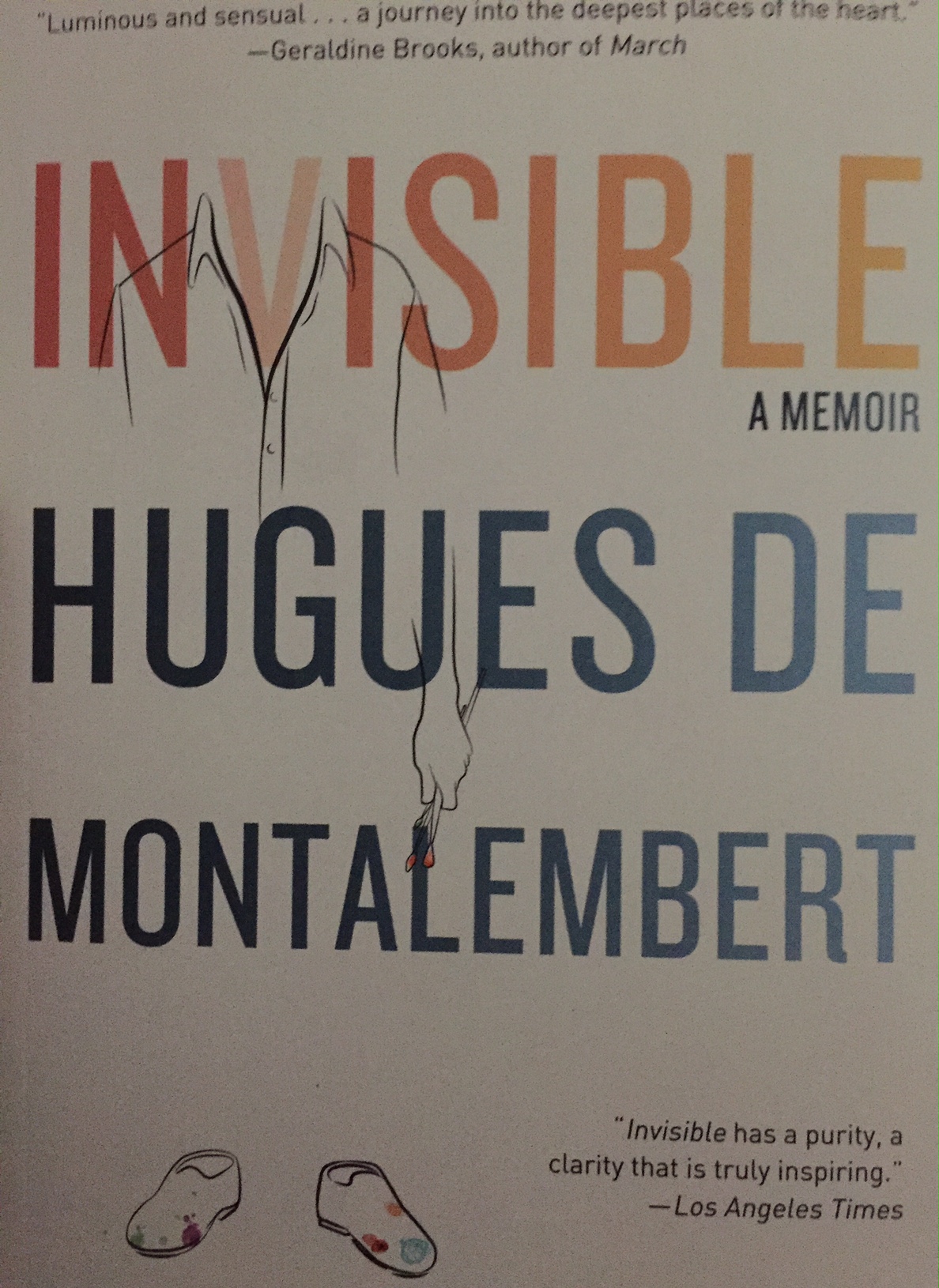
Invisible: A Memoir by Hugues de Montalembert
Invisible Book
Invisible: A Memoir by Hugues de Montalembert

Sight, like all senses, is seldom savored except in its absence. What it means to go suddenly and inescapably blind is the subject of Invisible by Hugues de Montalembert. One night Hugues loses his sight at the hands of criminals who invade his home. A painter and filmmaker, Hugues wakes in a hospital the next day to find he’s bereft of the sense most useful to him as a visual artist. Almost as though it’s trying to compensate, his brain tries to replace the lost vision with images cobbled together from memory and the faintest of visual stimuli. Even when sight is diminished to nothing, our minds seek meaning from the glimmers between shadows. But when despair would strike, a darkness of the mind clouded everything. I got the sense it was the inner confrontation rather than the external limitations on the physical senses that zapped the bulk of de Montalembert’s energy as he works to recreate his changed life.

Searching for meaning is as core a part of this book as it is a core part of human life. The searching takes on a different character and urgency as a result of the sudden blindness, but the search itself is universal. We are either helped or hindered by the personal resources we have to invest in the search, as well as the energy we put in. When we bump up against boundaries and limits that discourage us, we have to seek a way to overcome them. Hugues fights fiercely for independence and pushes the limits imposed by caregivers, medical experts, blind peers, and his own psyche. His struggle may echo setbacks we’ve experienced and from which, even though we may recover, we are never the same again. And nor would we spend much time desiring that if we want to improve our situation. Pragmatism wins out to prevent emotional collapse.

Ultimately, it’s a radical move that saves the author. He travels across the world alone. Never more fearful, he departs his home to see the world from his new vantage point. Venturing into the unknown, the known comes into sharper relief. Ingenuity comes out of necessity. Learning goes faster because the hurdles come quicker with no hiding place or comfort zone to retreat to. The author describes writing so long his pen runs out of ink and of course he doesn’t know it when it happens. He writes a whole day with no ink. He has nothing to show for his day’s work, but he had written the words and formed the thoughts by his own hand. Writing it is, even if no writing is left behind.

What constitutes “seeing” and what constitutes “not seeing”? “Vision is a creation,” Hugues writes. Based on that, the meaning of seeing remains invisible and we can only know it when we see it – when we see. Not so with not seeing. Seeing only what is readily apparent at first sight is the same as not to see.