Young Money

Young Money Book

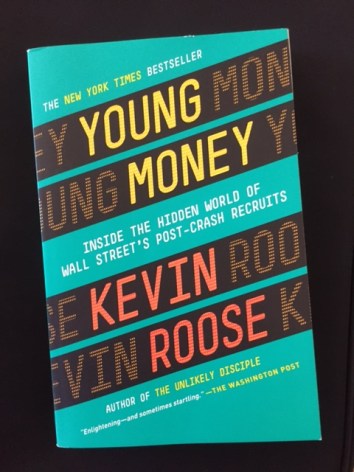
Perhaps more than any generation before us and certainly no less than any other, millennials seek work imbued with meaning beyond a paycheck. The aspiring young financiers profiled in Young Money: Inside the Hidden World of Wall Street’s Post-Crash Recruits aren’t exceptions to that. Sure, they seek power, status, accomplishment, access – and, of course, money. But for most of them these things don’t win out over the inescapable emptiness they find in the dismal labyrinth of Excel spreadsheets that is the life of a young analyst on Wall Street. In many cases, they have reached the pinnacle of post-graduation success only to find a winding staircase of further obstacles and challenges that leads to yet grander heights of worldly success. In the end, they’re less afraid of the failure to reach those heights than the emptiness awaiting them in the corner office.
Young_Money

Kevin Roose brilliantly dissects the Wall Street recruiting machine. He exposes the process that leads directionless overachievers down a well-travelled road to material riches. The road serves as a sort of “cashing-in” on their abundance of talent, ambition, and fear. Many start out having drunken the Kool-Aid that they are somehow serving the wider good of society, rather than fueling a financial engine that allows the vast corporate empires they work for to amass more wealth and enrich those at the highest rungs of the corporate ladder. Others admit full well the moral compromises their work involves, but they crave the money to pay off their student loans quickly and the chance to learn skills they might transfer to the work they want to do later. Sometimes that works out, but for many later never quite arrives.

Probably the best part about this book is the sympathetic portraits Roose writes about his young up-and-coming subjects. He’s both sensitive to and objective about their efforts to reconcile the inclination to achieve with the yearning for purposeful work. Having entered the workforce post-recession, this generation of recruits clings to the security of an established foothold of economic power, while at the same time acutely aware of both its moral precariousness and vulnerability to hubristic collapse. Even as the harried young financial footsoldiers pull themselves back and forth to the office (when they do indeed leave it), this awareness induces a chronic psychological strain. It’s a tough thing to watch the best and the brightest mortgage their souls like that. It makes you wonder about those on the other side of the trade. And it reminds you of the peace we all have to make with how we choose to spend our time on this earth.
Nuns Rule

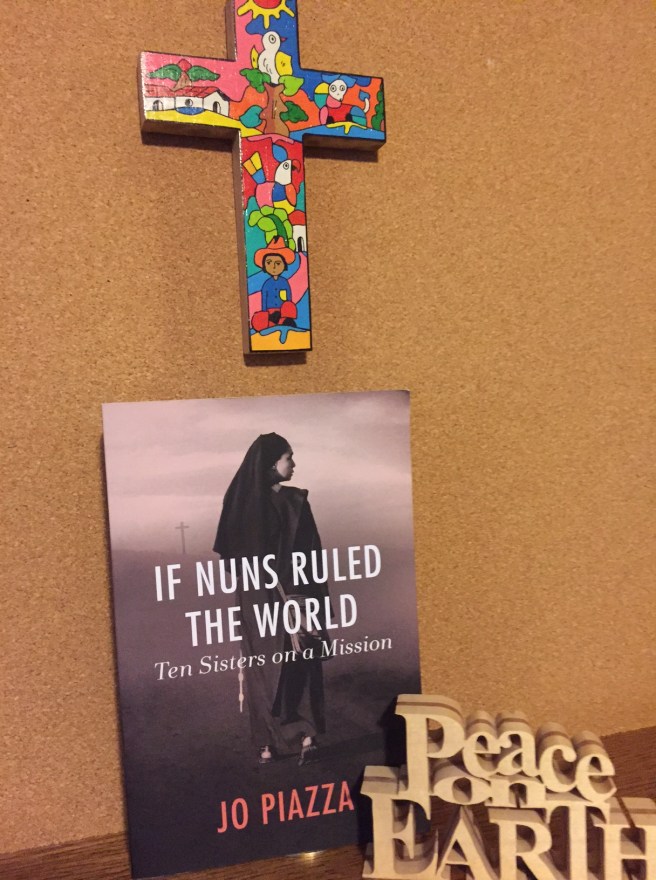
Forget what you think you know about nuns and the role of women in the Catholic Church. Jo Piazza’s If Nuns Ruled the World: Ten Sisters on a Mission serves up ten profiles in courage that will alter your perception of Catholic religious women. Leaders and activists, the American women Piazza profiles exemplify what it means to live out a commitment to social justice. Piazza shines a spotlight on the way each of these unique women carves out a niche within which she makes a remarkable contribution to the Church and the whole of American society.

Nuns_Ruled_World

To take one example, Sister Jeannine Gramick advocates for gay rights, including gay marriage. Often exposing herself to criticism and reprimands from other Catholic leaders, Sister Jeannine promotes dialogue, outreach, and advocacy for a more inclusive Church and society that embraces gay men and women in the totality of who they are in relationship to one another. The seedling of her calling to this mission grows from meeting a handsome gay man at a party one night. What then starts as a home ministry blossoms into a full-blown organization, and eventually multiple organizations. Sister Jeannine’s courage to promote gay rights and establish a connection to and from a Catholic community from which gay people have been alienated is, for her, all part of the Christian mission to bring God’s children together in love.

Sister Tesa Fitzgerald founded Hour Children to help women in prison connect with their children while they serve out their sentences.  Sister Simone Campbell assumes the unenviable task of taking Catholic social justice issues to the sources of America political power. Meanwhile, Sister Nora Nash bellies up to power brokers of the corporate variety as an activist investor of sorts. What they all have in common is the capacity to defy any stereotypical or popularized version of what it means to live their vocation as religious women. They have chosen to model self-gift. By taking their individual gifts and gifting them back to a culture in which they often represent the counterculture, they have shown us a way of Christian living as old as Christianity itself.

As individuals working independently and as kindred spirits working collectively to shape a more inclusive America, the nuns profiled in this book give witness to living a contemplative life that is active in the world. They are examples of modern heroism and evidence of the spiritual riches that come from meaningful work. They may not generate the kind of wealth that accrues on balance sheets, but the value they create and the dividends they generate grow the common good.

Ordinary Perfection

My reflection on Life and Holiness by Thomas Merton

Ordinary perfection and holy humanism aren’t terms that mean much to the modern ears that may hear them. So why, when they sparkle between the lines of Thomas Merton’s Life and Holiness, do they nonetheless have the power to captivate? Perhaps we have a sense that our lives mean more than completing tasks, making money, providing for family and friends, creating art, and speculating about the future. These goals may mean a great deal to us, as they should. Yet, so much of what gives meaning in life also comes from the ordinary, chance encounters with people we know and people we don’t. We have the opportunity to be charitable or not to be, to witness to what we stand for or not to. We can be faithful to what we know to be true or not be. These ordinary choices matter.

Life Holiness Thomas Merton
Life and Holiness by Thomas Merton

Thomas Merton could be referred to as a saint of the unsaintly. He espouses the saintliness of the everyman. And he does it in a way that doesn’t cheapen sainthood. He doesn’t say you’re okay as you are. What he does is simply put sainthood within your grasp as an ordinary person. He says no matter how difficult it is to live a life of honest and pure faith, no one is exempt from the invitation to love. We all have the capacity and the responsibility to love as deeply as we can. Each must serve God and one another in the unique, irreplaceable manner only he or she can. Our lives – all our lives – are pedestals that honor the values we hold dearest or we have ignored the Christian vocation that has stared us in the face since baptism. He makes no bones about the sacrifice involved and the self-discipline required; it’s the ducking out of discipleship he flatly refutes.

Merton makes it clear there isn’t one way to be holy, just as there can’t possibly be only one way to do God’s will. No, God’s will for each of us is as particular to us as it is inescapably ordinary – meaning that it is ordained to apply to everyone. No matter how important society or the organizations we work for may consider us, there is an inner call to holiness that is absolutely direct in relation to us. Religious experiences mediated by the Church and others provide a surely very helpful road; however, the map to spiritual fulfillment is written in some ways more completely on the heart than anywhere else. And so, there are times we must question and challenge established conceptions – soul searching, some call it. Indeed, we hear Merton echo, searching the will of God for us in our souls is precisely the place we ought to look for it.

The type of perfection Merton describes is the ordinary kind, all the more impressive for its achievability. Perfection that exists only as a rarefied aspiration seldom does anyone any real good. Merton’s call to holiness is on the human level. His work of perfection is the everyday diligence that shines through our work life as readily as our spiritual life. we are caretakers of one another, just as we are caretakers of our souls. And it will often be in the ordinary caretaking we do that we get closest to the extraordinary perfection that we seek.

Bearish Outlook

The Beaufort Diaries by T Cooper
Beaufort Diaries
The Beaufort Diaries by T Cooper

Horatio Alger this bear is not. It isn’t your great grandfather’s rags to riches story when a polar bear becomes a climate refugee and works his way through dead-end jobs as a cub laborer on fishing trawlers, eventually earning enough dough to go wing it in sunny Los Angeles. Having been an actor myself pursuing fame, fortune, and mostly just a way to make a living doing what I loved, the tale of Beaufort the polar bear doing the Hollywood hustle endeared itself to me at the outset. Despite the bad influences of Leonardo DiCaprio and Beaufort’s cokehead Icelandic girlfriend Svava, Beaufort maintains a down home sensibility forged deep in the Artic heartland.

Unfortunately, this sensitive soul of a bear gets ostensibly crushed under the mirage of Hollywood dreams. A familiar story of the downward spiral of celebrity plays out in an often engrossing and sometimes achingly uncomfortable way. Beaufort’s self-absorbed self-destruction has you sympathizing and disgusted with him in turn. Cooper goes to some less than cuddly places with our bear hero’s story. Sexual avarice, addiction, and the aching loss of hope pile higher atop Beaufort than the towering glaciers of his youth stretched up to the sky. He takes professional risks, that while seemingly admirable, are filled with artistic compromises and egoistic obsession.

A move to New York and a genuine submission to the discipline of recovery offer some relief from his anguish. Beaufort begins to approach his art from a place of humility and self-abnegation. He decides to tell the story that is in him to tell. And such is the lesson buried within Cooper’s funny and strange piece about a polar bear who lost his way in more ways than one. We come into our own when we look within ourselves to see the self as God sees it, and look outside ourselves to see the world as God sees it. In doing that, we see what is best in us is what the world needs most from us. What is lacking in us is what the world cannot give. And we need not find it there. Rather, when brokenness and wholeness don’t quite fit together on any given day is when we have to hold still in patience waiting for the pain to pass. Pass it will. For we can’t avoid being wounded, but we can live through our wounds and the living is the balm that heals us.

Beaufort has his sour and petulant moments. He isn’t the most endearing of characters as the story winds on, but he has an outlook that makes the reader want to comprehend the way he experiences the world. Understanding it to be a moderately naïve and charmingly chivalrous optimism that often turns icy before melting afresh into cheerfulness, I – and I dare say the world – could certainly do with a more bearish outlook on life.

Cathedral Builders

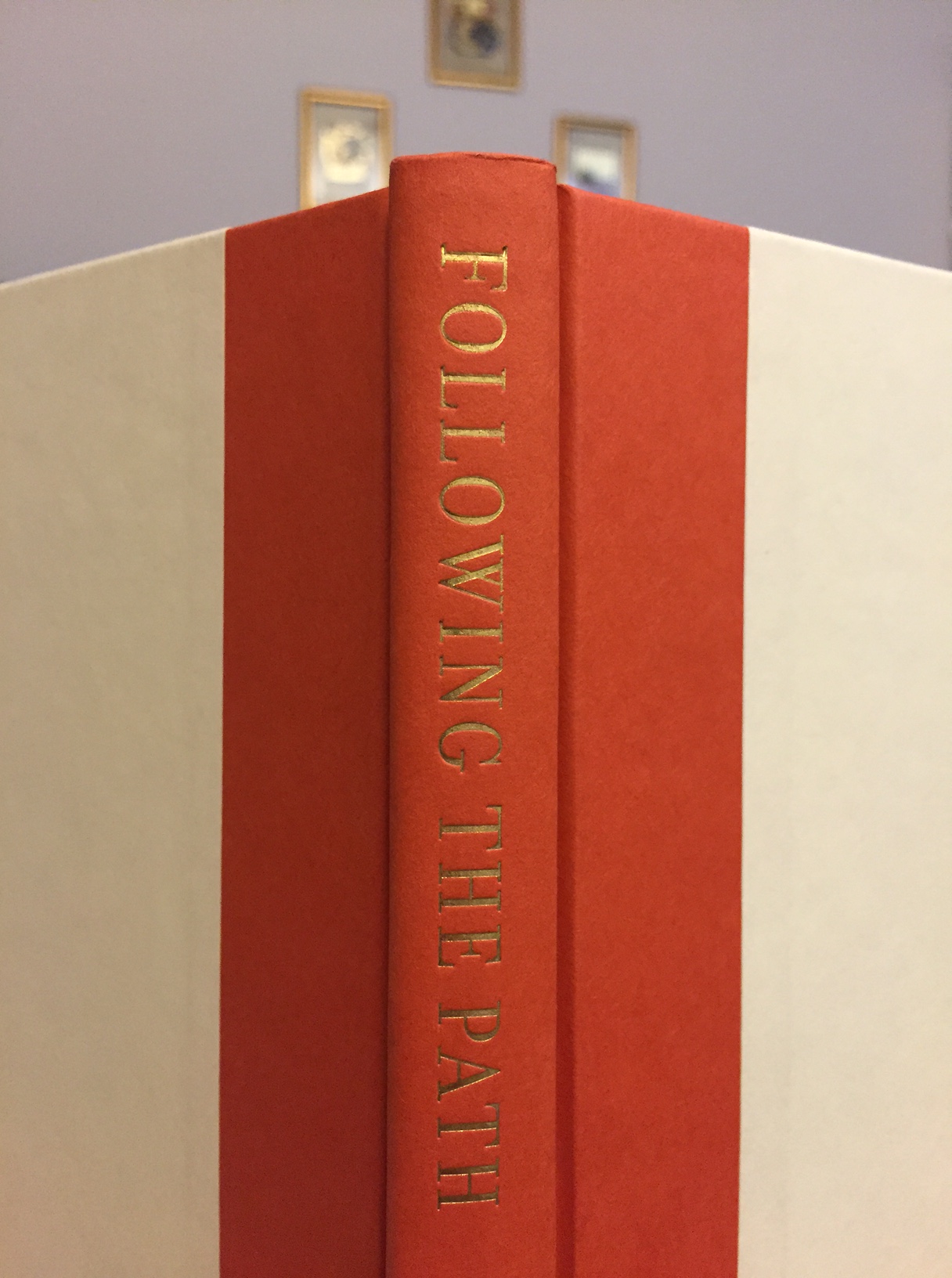
Reflecting on Following the Path: The Search for a Life of Passion, Purpose, and Joy by Joan Chittister

Vocation is an outworn word. Modern day career counseling doesn’t really include notions like “having a vocation” or “finding a calling” anymore. There’s talk of matching skill sets to career paths or making sure your job search leads to a position with a good fit. From the sound of things, it has more in common with trying on clothes or cramming yourself into a mold as gently as possible. This isn’t what spending your finite energy to do your life’s work is all about.

Following the Path: The Search for a Life of Passion, Purpose, and Joy by Joan Chittister

To say each of us has certain gifts we can offer our brothers and sisters isn’t the same as saying we have “skill sets.” No, gifts retain the ineffable quality of their transcendent origin in the divine. Gifts come with a responsibility to place them at the feet of one another – to offer them up in service. Skill sets are simply purchased at the price of the sweat of our brow, having earned them by patient practice and dogged persistence. Both have their place and their usefulness, but only gifts give us purpose as well as productivity because only gifts call forth what is silently written on our hearts in secret intention. To puzzle out the intent behind our lives and gifts is one of the great joyful confusions we have in our time on this earth. To turn aside from discovering the hidden graces offered by the embracing of our gifts is to refuse the measure of divinity poured out upon each of us in a unique, irreplaceable way.

What Joan Chittister points the way toward in Following the Path is the commitment to do what it is in us to do. We do it with the courage not to quit when the resistance is most acute and the despair is most severe. That is precisely the time to connect with the essential core of who we are, remember what we stand for, and insist on a life’s work that is congruent with our most deeply held values. This is how we ought to approach the question of how to spend our time and how to encourage those we love to follow their own path specific to them.

We are called to be more than good workers. We are called to be cathedral builders. We fashion out of the fabric of our lives a tapestry of stories. Some are woven of adventure, some of tragedy, and still others of profoundly blissful comedy. What they all must be is grand tales of giant proportions. No petty drama or small-scale farce will grace the stage of life we act upon. The work we do and the life we live must be grander than that. We build monuments, not statues. We build cathedrals, not huts.