
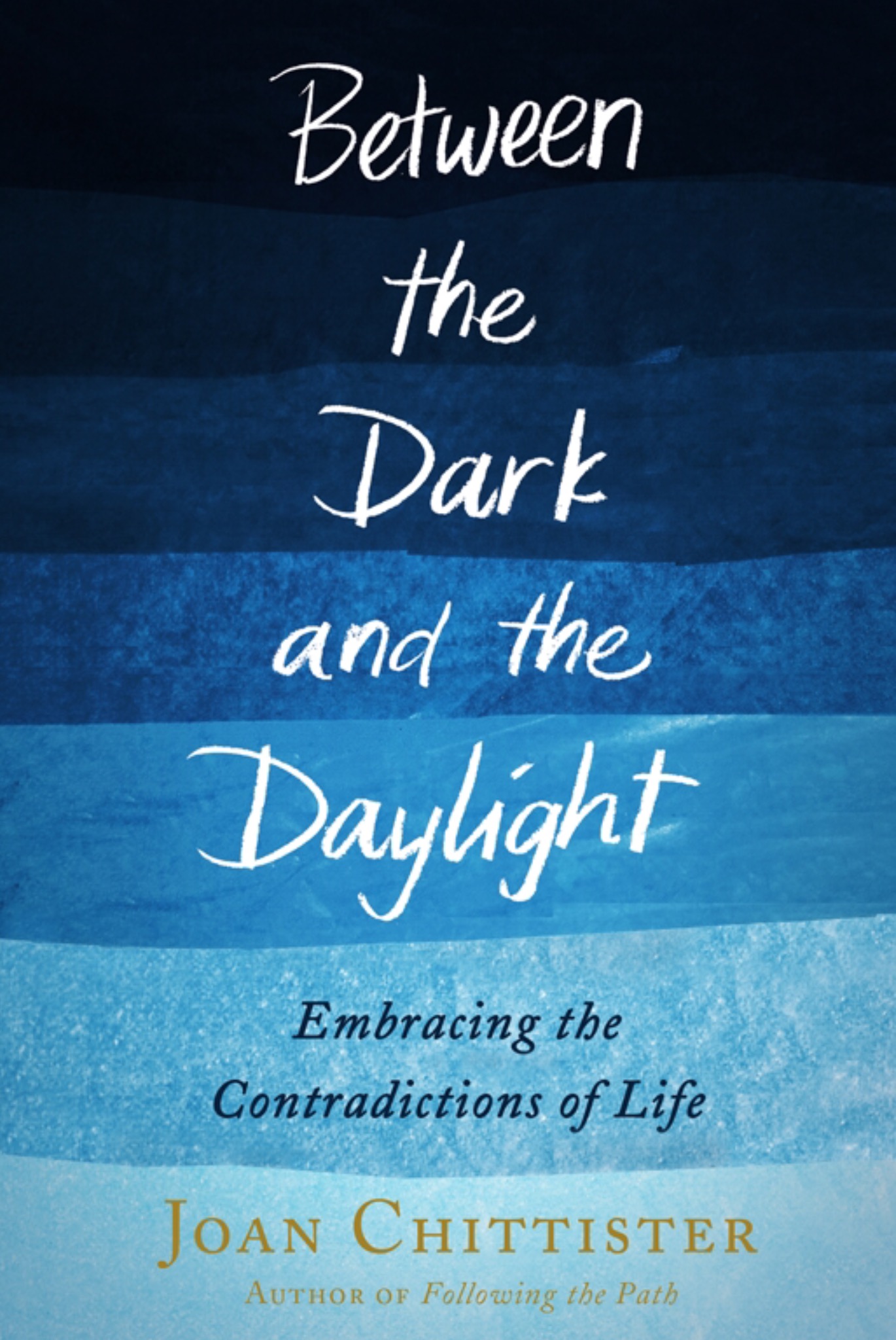
Reflecting on Between the Daylight and the Dark: Embracing the Contradictions of Life by Joan Chittister
Paradox and contradiction permeate life. That which we need for growth in the spiritual life is nearly always uncomfortable or disconcerting. When life knocks us off-balance, we ultimately find a surer footing and a deeper harmony as a result. Most of us want to avoid these situations, but we strive against that impulse, push outside our comfort zones, and aim for expanding our horizons despite the temporary growth pains. In a series of short chapters, Joan Chittister illuminates this paradox among many others we encounter on life’s spiritual journey. A perfect companion for Lent, this volume is magnetic in its simplicity. Sketching the contours of each contradiction, Joan’s reflections remove some of the fear we feel in these situations and grant us a share of her courage.
Doubt isn’t something that usually shows up in any list of important virtues. Neither is uncertainty. Chittister challenges us to see these “negative” perspectives as something more than things to be overcome. Rather, they are to be embraced. Before knowledge, she would argue, comes confusion. The mind becomes clouded before the clouds can lift to reveal the light of understanding. There is no arrival at one’s destination without the first unsure steps. Those steps aren’t something to hurry through or get over with as quickly as possible, but they’re to be actively experienced for what they are if we want to drink fully the marrow of life.
Darkness haunts all of us in terribly personal and individual ways. None of us have the same sins, vices, or transgressions against others. We run from our shadows. They frighten us all the more for having our shape. Evil, it seems, is as particular as goodness. Acknowledging and relating to the shadow side of the self affords us opportunities for change. Joan’s descriptions of this change, though, bring out the quality of conversion of heart. We often think of life-changing experiences as moments of clarity, religious visions, or dramatic experiences that alter our lives in a single instant. While these types of changes do happen, most change is gradual. It takes place incrementally over the course of days, months, and years. Rooted in the heart, these changes are no less important for their gradual evolution over time. In many cases, we make more diligent spiritual progress by faithful repetition and loving discipline than by trying to artificially generate ecstatic leaps forward. Enlightenment happens on God’s terms not on ours.
Anyone who meditates or practices a form of contemplative prayer understands this firsthand. It isn’t always doing but sometimes not-doing that moves us further along the way. Indeed, the whole concept of a set path or a defined distance we must travel to God collapses when it becomes clear that life isn’t linear at all. We connect to people, ideas, and the natural world in a web of strands – each having its own purpose, leading where it must go, and holding for a moment the will of the Divine for us. Some of these connections will outlast us and others may not, but they’ll have served their purpose and thereby served us well in any case.
Some questions never resolve themselves, not in this life anyway. The discovery Joan helps us make, and it is one I feel I must continually rediscover year after year, is that this is how it should be. We haven’t failed in life if questions persist. Anxiety, like the poor, will always be with us. There’s nothing wrong with not knowing the answers to life’s deepest questions beyond the shadow of doubt. The only problem is when we cease to ask them altogether.
 book reading life