Radical Hospitality

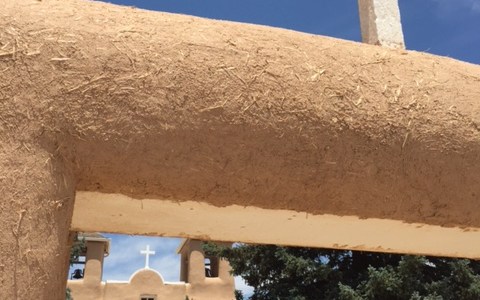
St. Francis Church New Mexico

At its most basic, hospitality means saying “welcome in” to the friend and the stranger alike. This doesn’t mean you share the same intimacy with a stranger as with a friend. It only means you’re open to and grateful for the gift of discovering what any person has to offer no matter who they are. Father Daniel Homan and Lonni Collins Pratt unpack the virtue of hospitality and what it means today in Radical Hospitality: Benedict’s Way of Love. Their interpretation flows from the monastic spirituality of St. Benedict, who in his Rule of St. Benedict set the expectation that monks extend hospitality to others. Hospitality is for everyone, not just monks. While hospitality has become associated with hotels, tourism, and the business of keeping people entertained, the authors explain that it is about relationships. Hospitality expresses itself in relationships that start with gratefulness for the gift of encountering someone else instead of mistrust, suspicion, or – worst of all – the desire to use another as an instrument to our ends.
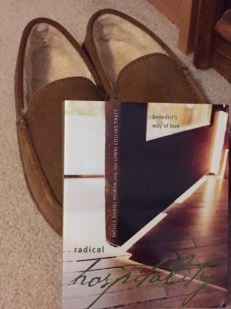
Radical Hospitality Homan and Pratt
Radical Hospitality: Benedict’s Way of Love


Stories abound in  holy texts, especially those passed on by desert people (like the Bible or the Qur’an), of the importance of hospitality. It was a life or death matter for travelers in earlier eras. And in many parts of the world or in the case of refugees fleeing their home countries, it is still a matter of life and death today. Even outside of these dire circumstances, the spirit of hospitality calls us to a more authentic way of relating to each other. We can choose to see in other people a grace that we admire, a skill we share, or a virtue we seek. So often when we search for the good in others, we find it in ourselves. When we focus on the evil, it appears in us too. Perhaps in learning hospitality toward others, we learn to live with ourselves. We learn to accept our faults when we can more tolerably overlook the faults of our fellow travelers. Through hospitality, we learn the courage to be kind – both to ourselves and those very different from us.

Even as we create a more technologically advanced world, we need to make it hospitable. We need to make it a fit place for spiritual beings to reside in. Sending an email, joining a video conference, or posting on someone’s website are the new ways we sometimes welcome others into our home or enter as strangers into someone else’s. Technology makes us more accessible to each other through communication tools. Consequently, we have to make sure that when we access each other we do so in a way that is humane and hospitable. Sending and receiving information has never been so easy, but it has probably never been so difficult to maintain the level of hospitality required. I am grateful to Homan and Pratt for the depth of their study of hospitality and the accessible way in which they communicate it in Radical Hospitality. At its most basic, hospitality means saying “welcome in”- easier to say about your house than about your heart.
 

Nuns Rule

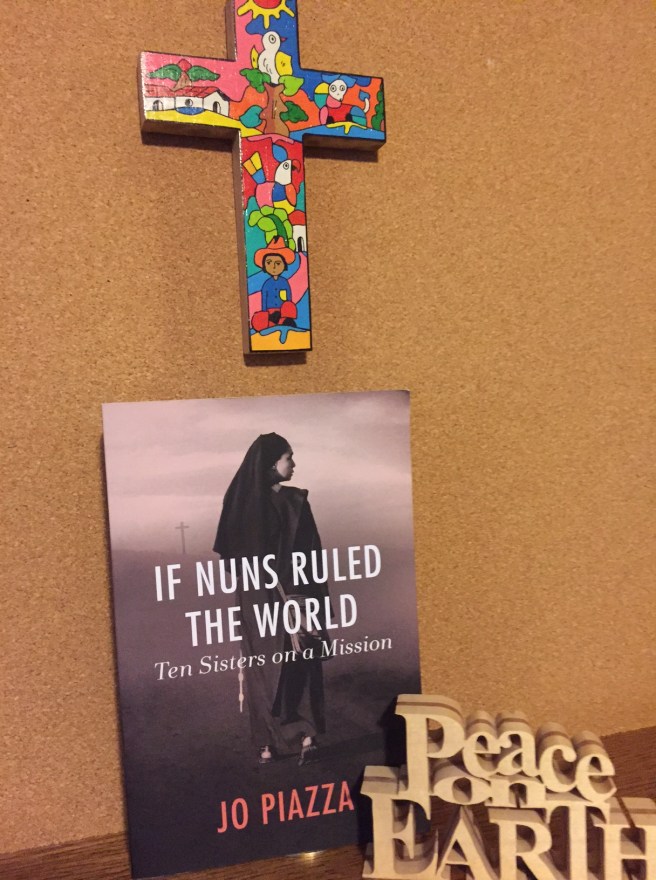
Forget what you think you know about nuns and the role of women in the Catholic Church. Jo Piazza’s If Nuns Ruled the World: Ten Sisters on a Mission serves up ten profiles in courage that will alter your perception of Catholic religious women. Leaders and activists, the American women Piazza profiles exemplify what it means to live out a commitment to social justice. Piazza shines a spotlight on the way each of these unique women carves out a niche within which she makes a remarkable contribution to the Church and the whole of American society.

Nuns_Ruled_World

To take one example, Sister Jeannine Gramick advocates for gay rights, including gay marriage. Often exposing herself to criticism and reprimands from other Catholic leaders, Sister Jeannine promotes dialogue, outreach, and advocacy for a more inclusive Church and society that embraces gay men and women in the totality of who they are in relationship to one another. The seedling of her calling to this mission grows from meeting a handsome gay man at a party one night. What then starts as a home ministry blossoms into a full-blown organization, and eventually multiple organizations. Sister Jeannine’s courage to promote gay rights and establish a connection to and from a Catholic community from which gay people have been alienated is, for her, all part of the Christian mission to bring God’s children together in love.

Sister Tesa Fitzgerald founded Hour Children to help women in prison connect with their children while they serve out their sentences.  Sister Simone Campbell assumes the unenviable task of taking Catholic social justice issues to the sources of America political power. Meanwhile, Sister Nora Nash bellies up to power brokers of the corporate variety as an activist investor of sorts. What they all have in common is the capacity to defy any stereotypical or popularized version of what it means to live their vocation as religious women. They have chosen to model self-gift. By taking their individual gifts and gifting them back to a culture in which they often represent the counterculture, they have shown us a way of Christian living as old as Christianity itself.

As individuals working independently and as kindred spirits working collectively to shape a more inclusive America, the nuns profiled in this book give witness to living a contemplative life that is active in the world. They are examples of modern heroism and evidence of the spiritual riches that come from meaningful work. They may not generate the kind of wealth that accrues on balance sheets, but the value they create and the dividends they generate grow the common good.

Knights Rule

Written as a letter from a father, Ethan Hawke’s Rules for a Knight brings together the collected wisdom of sages as diverse as Peter Drucker, Nelson Mandela, Thich Nhat Hanh, and Julian of Norwich. Hawke surveys knightly virtues such as gratitude, courage, and discipline. What ties them together is the central story of a grandfather passing on wisdom to his children and the tight, unadorned prose he uses to capture his thoughts.

There’s a sense of respect and reverence that flows through these passages on chivalrous values. It’s a reverence for the virtues themselves and their role as the mortar of civilized society, but it’s a reverence also for the task of passing on knowledge from one generation to the next. The sacredness of this task is not lost on the father penning these pages. There is an awareness that to have lived the virtues is essential, but nearly as essential is to pass on the lessons of one’s life that are learned at the price of grief, pain, and sacrifice.

RulesforaKnight

A particularly choice example of this is when Thomas (the father and knight) tells the story of how he came to love the children’s mother. It’s one of the most honest and candid accounts of true love in literature I can recall. He contrasts it with the fairytale romance of “falling in love” that so many stories exemplify, often imparting a faulty understanding of love. Thomas contrasts love with passion and spells out the key difference by illustrating it with a love story from his own life.

One of the unexpected benefits of Hawke’s approach with this book is an awareness of how the lessons we learn in our own lives build on those our elders have taught us. Over time, we extend the wisdom we have received from others through our own experiences. In turn, we then build on what we learned by passing it on to those who will live after us to continue to extend this collective wisdom with their own life lessons. Rules for a Knight contains many essential truths, but none more essential than the duty to share the lessons of our lives with future generations.

Close to Home

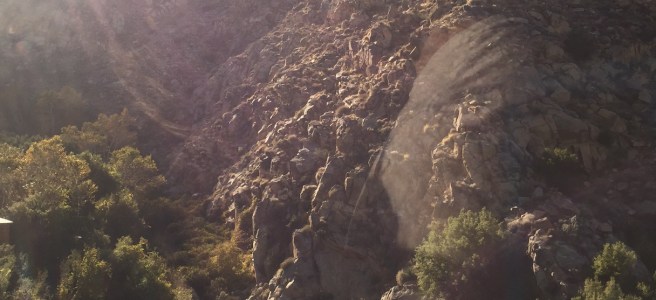
Face Mountain Sun

I’ve heard the phrase “too close to home” more in the last few days than I pray I ever will again. My wife and I live in Redlands, CA. She works at a nonprofit in San Bernardino down the street from the center where the recent mass shooting took place. I work in Redlands near the neighborhood where the shooters’ apartment stocked with weaponry was discovered. The shooting rocked our community, our sense of safety, and our sense of being at home. The fact that it may in part have been designed to do just that makes it worse. The fact that the killers are dead gives us no solace. Only our friends, family, coworkers, neighbors, and love for one another can provide that.

The person and the place you call home is determined most by bonds of love and generosity. Much less by the things we oppose, and even less still by what we hate. And hate we sometimes will – because the hateful and the repulsive will always be with us. But our hatred doesn’t define us; it doesn’t make us powerful. Only our love can do that. It’s not just what makes us feel safe and at home. It’s the only thing that ever has.

When watching the news release the names of the shooters, our hearts sank. We feared the killers might be identified as Muslims and that this might bring a fresh wave of inhumane hatred with their act of inhumanity. It’s a double crime to betray your community with horrific violence and at the same time corrupt the names of good and peaceful religious people who are among the creative citizens who call America their home. Such an act does violence to truth as well as to flesh and blood.

We have personal as well as social reasons to fear. My wife is Muslim and I am Catholic. We met 8 years ago and got married for the first time nearly two years ago. I say “for the first time” because we were married three times to each other – once civilly (and within 90 days of legal entry) in accordance with American law, once in accordance with Islam, and once in accordance with the Catholic Church. We’ve made an art of reconciling requirements, statutes, and limitations, and turning them into a beautiful journey we can share together on our way to creating a life of joy and family and service to others.

Is ours a story of immigration, of interfaith union, of overcoming odds and obstacles? Maybe it is, but that’s not how we see it. To us, ours is a love story like any other. Have we encountered bigotry and unintentional insult? Yes. Do we live in a safe world? Sometimes it is and sometimes it’s not. Do we live in a world that supports our most glorious aspirations or one that’s hostile to our  deeply held dreams? Both. What about the country we call home? It often lives up to its reputation and sometimes it falls short. Does any of this paralyze us? Almost never.

And neither will the mass shooting here in San Bernardino. The day after the shooting, people lined up at a local blood bank down the street from the building where the shooting happened to donate blood for the victims. We’re a people that literally bleed for each other when one of us is in trouble. That’s a beautiful thing and something that greatly pleases the God who made us, no matter by what name we address Her or by what prophet He speaks to us.

Much will be said about things we should do to make it more difficult for people to commit acts of mass murder like the one that happened here. We should talk about those things and we should do more to prevent these acts. But we should also do more to foster communities of hospitality, respect, and resilience. We should do more to be a haven for refugees, immigrants, and the poor. We should do more to live up to our highest ideals and not lower our standards in the interests of  self-interest and self-protection. In the end, that doesn’t make us safer – only smaller.

Many and specific will be the calls to respond. And if we must respond to extremism in the extreme, let it be thus: to extend friendship with those different from us, to welcome the stranger from foreign lands, to give when we haven’t enough ourselves, to learn more about the people we find most difficult to understand, to serve one another when it makes us most uncomfortable, and to forgive when we would rather take vengeance. At this time, I’m reminded of the words of a Jesuit priest who spoke at mass on the day of my Georgetown graduation. While I don’t remember his name, his words I’ll never forget. He said, “The quality of your life will be determined by the quality of your loving.” No words I’ve heard feel truer to me now than these.

In the final analysis, it isn’t so much a matter of avoiding or preventing evil in this world. Evil will never be wholly overcome short of the next life. Rather, we must overcome our own impulse to despair – what Kierkegaard called the “sickness unto death” – and give over as much of ourselves to love and serving the Good as there remains in us to be offered. This is the holy sacrifice. This is the spotless victory.

Face Mountain Sun
Face in the Mountain in the Sun

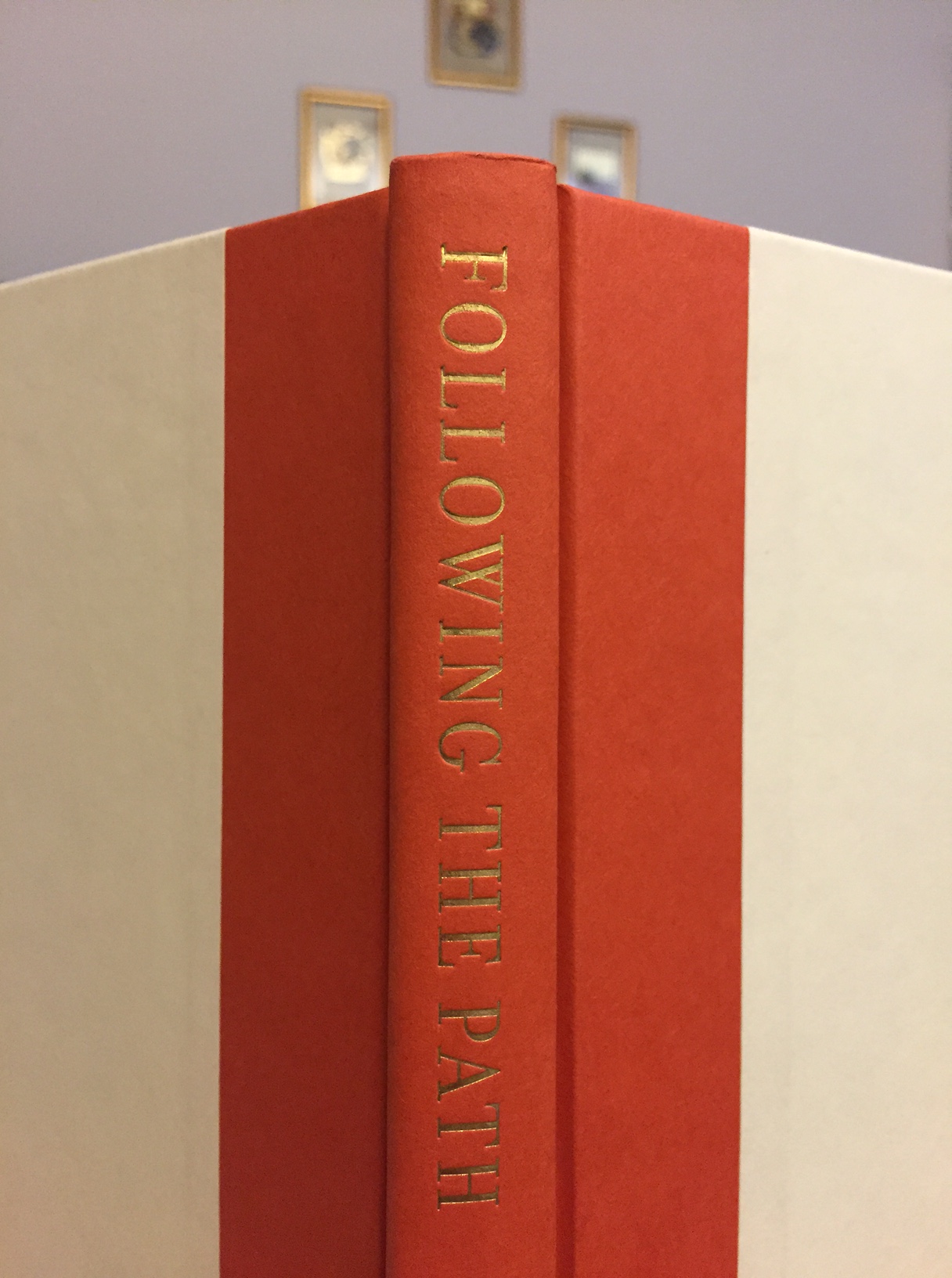
Cathedral Builders

Reflecting on Following the Path: The Search for a Life of Passion, Purpose, and Joy by Joan Chittister

Vocation is an outworn word. Modern day career counseling doesn’t really include notions like “having a vocation” or “finding a calling” anymore. There’s talk of matching skill sets to career paths or making sure your job search leads to a position with a good fit. From the sound of things, it has more in common with trying on clothes or cramming yourself into a mold as gently as possible. This isn’t what spending your finite energy to do your life’s work is all about.

Following the Path: The Search for a Life of Passion, Purpose, and Joy by Joan Chittister

To say each of us has certain gifts we can offer our brothers and sisters isn’t the same as saying we have “skill sets.” No, gifts retain the ineffable quality of their transcendent origin in the divine. Gifts come with a responsibility to place them at the feet of one another – to offer them up in service. Skill sets are simply purchased at the price of the sweat of our brow, having earned them by patient practice and dogged persistence. Both have their place and their usefulness, but only gifts give us purpose as well as productivity because only gifts call forth what is silently written on our hearts in secret intention. To puzzle out the intent behind our lives and gifts is one of the great joyful confusions we have in our time on this earth. To turn aside from discovering the hidden graces offered by the embracing of our gifts is to refuse the measure of divinity poured out upon each of us in a unique, irreplaceable way.

What Joan Chittister points the way toward in Following the Path is the commitment to do what it is in us to do. We do it with the courage not to quit when the resistance is most acute and the despair is most severe. That is precisely the time to connect with the essential core of who we are, remember what we stand for, and insist on a life’s work that is congruent with our most deeply held values. This is how we ought to approach the question of how to spend our time and how to encourage those we love to follow their own path specific to them.

We are called to be more than good workers. We are called to be cathedral builders. We fashion out of the fabric of our lives a tapestry of stories. Some are woven of adventure, some of tragedy, and still others of profoundly blissful comedy. What they all must be is grand tales of giant proportions. No petty drama or small-scale farce will grace the stage of life we act upon. The work we do and the life we live must be grander than that. We build monuments, not statues. We build cathedrals, not huts.

Sea Sharp

The Rime of the Modern Mariner by Nick Hayes
Reflecting on The Rime of the Modern Mariner by Nick Hayes

Elemental forces seldom play the towering role in our lives that they did for the people of antiquity. Nature looms less large in a hi-tech society where people relate more to information than to space. We think more in terms of data than geography now. After all, ideas traverse the globe more swiftly than weather or disease does. Identity theft is a catastrophe more likely to be visited upon us than an earthquake, tornado, or fire.

The Rime of the Modern Mariner makes clear the peril we are in by living so estranged from nature. Like love, we may take it for granted while it slowly ebbs away and leaves behind a gaping canyon within us. As the mariner seeks to drag the effete divorcee from his perch of complacency, so it seems does Nick Hayes grapple with readers to haul us back to our senses.

The confrontation of note, though, is not between the mariner and the divorcee, but rather between the mariner and death. Death redeems him. Death descends in the form of the innocent albatross slaughtered on a whim, the swirling seafaring garbage piles, and the sticky sheets of poisonous petroleum goo. It visits upon him not a ghastly vision of what could be, but the horrible truth of what is. It suffocates him in guilt as men have strangled Mother Nature. But unlike the sleep of death, the mariner wakes from the slumber that comes upon him. And such is the hope of the author for the reader I think. There is a note of hope in the image of life that emerges that humans allied with nature can undo what humans have wrought against it.

Alas, to live estranged from nature is to live estranged from our human nature. When we live apart from the natural world, we tear ourselves apart. As vividly as Nick Hayes has depicted the wrenching of the old mariner’s soul, so do we rend the sinews that knit our bones when we decouple from our link to the whole of creation. We will heal with nature or we will burn with it. We will rehabilitate the environment we inhabit or we will perish in its ashes.

Doubt Faithfully

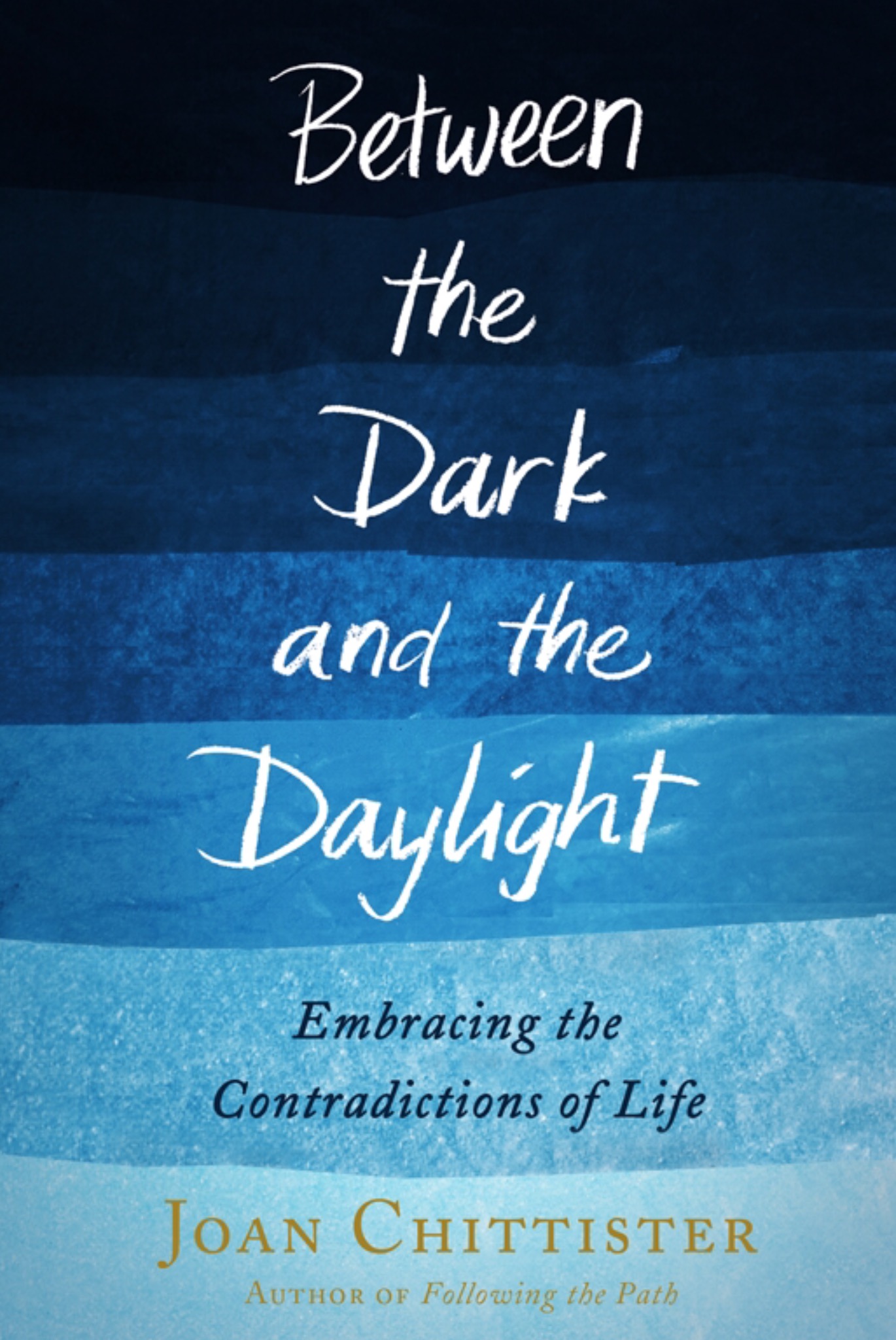
Reflecting on Between the Daylight and the Dark: Embracing the Contradictions of Life by Joan Chittister

Paradox and contradiction permeate life. That which we need for growth in the spiritual life is nearly always uncomfortable or disconcerting. When life knocks us off-balance, we ultimately find a surer footing and a deeper harmony as a result. Most of us want to avoid these situations, but we strive against that impulse, push outside our comfort zones, and aim for expanding our horizons despite the temporary growth pains. In a series of short chapters, Joan Chittister illuminates this paradox among many others we encounter on life’s spiritual journey. A perfect companion for Lent, this volume is magnetic in its simplicity. Sketching the contours of each contradiction, Joan’s reflections remove some of the fear we feel in these situations and grant us a share of her courage.

Between the Dark and the Daylight: Embracing the Contradictions of Life by Joan Chittister

Doubt isn’t something that usually shows up in any list of important virtues. Neither is uncertainty. Chittister challenges us to see these “negative” perspectives as something more than things to be overcome. Rather, they are to be embraced. Before knowledge, she would argue, comes confusion. The mind becomes clouded before the clouds can lift to reveal the light of understanding. There is no arrival at one’s destination without the first unsure steps. Those steps aren’t something to hurry through or get over with as quickly as possible, but they’re to be actively experienced for what they are if we want to drink fully the marrow of life.

Darkness haunts all of us in terribly personal and individual ways. None of us have the same sins, vices, or transgressions against others. We run from our shadows. They frighten us all the more for having our shape. Evil, it seems, is as particular as goodness. Acknowledging and relating to the shadow side of the self affords us opportunities for change. Joan’s descriptions of this change, though, bring out the quality of conversion of heart. We often think of life-changing experiences as moments of clarity, religious visions, or dramatic experiences that alter our lives in a single instant. While these types of changes do happen, most change is gradual. It takes place incrementally over the course of days, months, and years. Rooted in the heart, these changes are no less important for their gradual evolution over time. In many cases, we make more diligent spiritual progress by faithful repetition and loving discipline than by trying to artificially generate ecstatic leaps forward. Enlightenment happens on God’s terms not on ours.

Anyone who meditates or practices a form of contemplative prayer understands this firsthand. It isn’t always doing but sometimes not-doing that moves us further along the way. Indeed, the whole concept of a set path or a defined distance we must travel to God collapses when it becomes clear that life isn’t linear at all. We connect to people, ideas, and the natural world in a web of strands – each having its own purpose, leading where it must go, and holding for a moment the will of the Divine for us. Some of these connections will outlast us and others may not, but they’ll have served their purpose and thereby served us well in any case.

Some questions never resolve themselves, not in this life anyway. The discovery Joan helps us make, and it is one I feel I must continually rediscover year after year, is that this is how it should be. We haven’t failed in life if questions persist. Anxiety, like the poor, will always be with us. There’s nothing wrong with not knowing the answers to life’s deepest questions beyond the shadow of doubt. The only problem is when we cease to ask them altogether.