Cathedral Builders

Reflecting on Following the Path: The Search for a Life of Passion, Purpose, and Joy by Joan Chittister

Vocation is an outworn word. Modern day career counseling doesn’t really include notions like “having a vocation” or “finding a calling” anymore. There’s talk of matching skill sets to career paths or making sure your job search leads to a position with a good fit. From the sound of things, it has more in common with trying on clothes or cramming yourself into a mold as gently as possible. This isn’t what spending your finite energy to do your life’s work is all about.
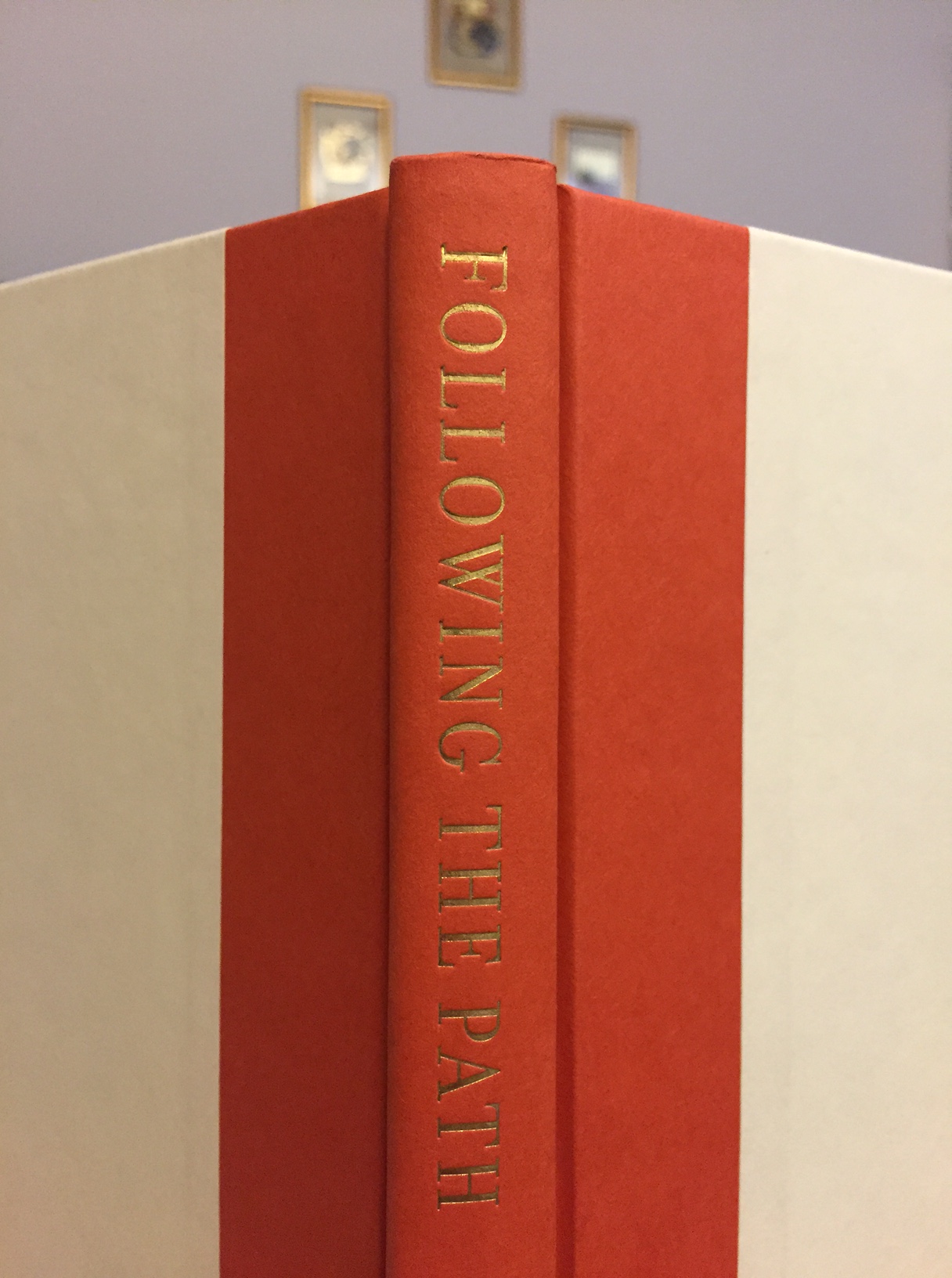
Following the Path: The Search for a Life of Passion, Purpose, and Joy by Joan Chittister

To say each of us has certain gifts we can offer our brothers and sisters isn’t the same as saying we have “skill sets.” No, gifts retain the ineffable quality of their transcendent origin in the divine. Gifts come with a responsibility to place them at the feet of one another – to offer them up in service. Skill sets are simply purchased at the price of the sweat of our brow, having earned them by patient practice and dogged persistence. Both have their place and their usefulness, but only gifts give us purpose as well as productivity because only gifts call forth what is silently written on our hearts in secret intention. To puzzle out the intent behind our lives and gifts is one of the great joyful confusions we have in our time on this earth. To turn aside from discovering the hidden graces offered by the embracing of our gifts is to refuse the measure of divinity poured out upon each of us in a unique, irreplaceable way.

What Joan Chittister points the way toward in Following the Path is the commitment to do what it is in us to do. We do it with the courage not to quit when the resistance is most acute and the despair is most severe. That is precisely the time to connect with the essential core of who we are, remember what we stand for, and insist on a life’s work that is congruent with our most deeply held values. This is how we ought to approach the question of how to spend our time and how to encourage those we love to follow their own path specific to them.

We are called to be more than good workers. We are called to be cathedral builders. We fashion out of the fabric of our lives a tapestry of stories. Some are woven of adventure, some of tragedy, and still others of profoundly blissful comedy. What they all must be is grand tales of giant proportions. No petty drama or small-scale farce will grace the stage of life we act upon. The work we do and the life we live must be grander than that. We build monuments, not statues. We build cathedrals, not huts.
Doubt Faithfully

Reflecting on Between the Daylight and the Dark: Embracing the Contradictions of Life by Joan Chittister

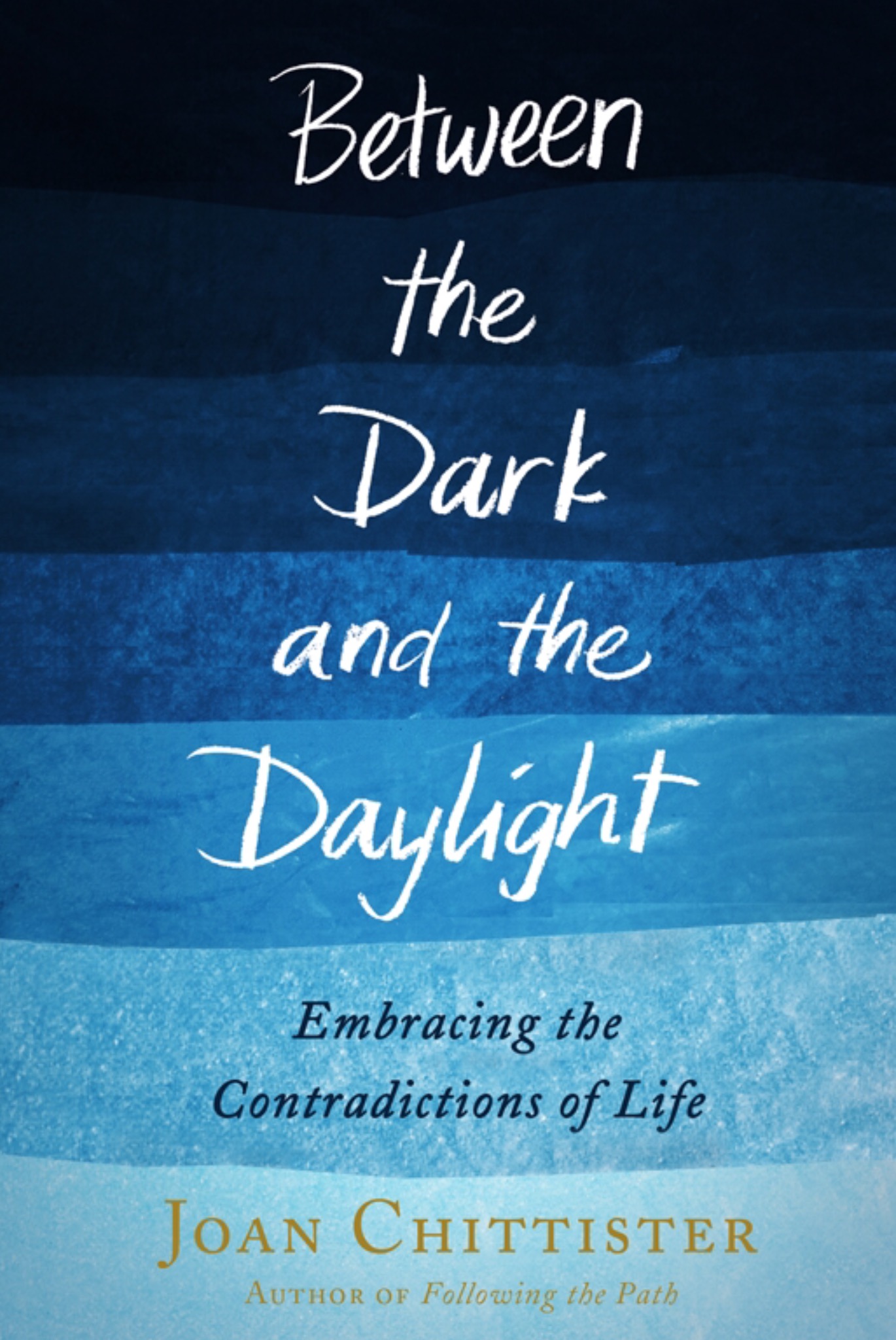
Paradox and contradiction permeate life. That which we need for growth in the spiritual life is nearly always uncomfortable or disconcerting. When life knocks us off-balance, we ultimately find a surer footing and a deeper harmony as a result. Most of us want to avoid these situations, but we strive against that impulse, push outside our comfort zones, and aim for expanding our horizons despite the temporary growth pains. In a series of short chapters, Joan Chittister illuminates this paradox among many others we encounter on life’s spiritual journey. A perfect companion for Lent, this volume is magnetic in its simplicity. Sketching the contours of each contradiction, Joan’s reflections remove some of the fear we feel in these situations and grant us a share of her courage.

Between the Dark and the Daylight: Embracing the Contradictions of Life by Joan Chittister

Doubt isn’t something that usually shows up in any list of important virtues. Neither is uncertainty. Chittister challenges us to see these “negative” perspectives as something more than things to be overcome. Rather, they are to be embraced. Before knowledge, she would argue, comes confusion. The mind becomes clouded before the clouds can lift to reveal the light of understanding. There is no arrival at one’s destination without the first unsure steps. Those steps aren’t something to hurry through or get over with as quickly as possible, but they’re to be actively experienced for what they are if we want to drink fully the marrow of life.

Darkness haunts all of us in terribly personal and individual ways. None of us have the same sins, vices, or transgressions against others. We run from our shadows. They frighten us all the more for having our shape. Evil, it seems, is as particular as goodness. Acknowledging and relating to the shadow side of the self affords us opportunities for change. Joan’s descriptions of this change, though, bring out the quality of conversion of heart. We often think of life-changing experiences as moments of clarity, religious visions, or dramatic experiences that alter our lives in a single instant. While these types of changes do happen, most change is gradual. It takes place incrementally over the course of days, months, and years. Rooted in the heart, these changes are no less important for their gradual evolution over time. In many cases, we make more diligent spiritual progress by faithful repetition and loving discipline than by trying to artificially generate ecstatic leaps forward. Enlightenment happens on God’s terms not on ours.

Anyone who meditates or practices a form of contemplative prayer understands this firsthand. It isn’t always doing but sometimes not-doing that moves us further along the way. Indeed, the whole concept of a set path or a defined distance we must travel to God collapses when it becomes clear that life isn’t linear at all. We connect to people, ideas, and the natural world in a web of strands – each having its own purpose, leading where it must go, and holding for a moment the will of the Divine for us. Some of these connections will outlast us and others may not, but they’ll have served their purpose and thereby served us well in any case.

Some questions never resolve themselves, not in this life anyway. The discovery Joan helps us make, and it is one I feel I must continually rediscover year after year, is that this is how it should be. We haven’t failed in life if questions persist. Anxiety, like the poor, will always be with us. There’s nothing wrong with not knowing the answers to life’s deepest questions beyond the shadow of doubt. The only problem is when we cease to ask them altogether.