
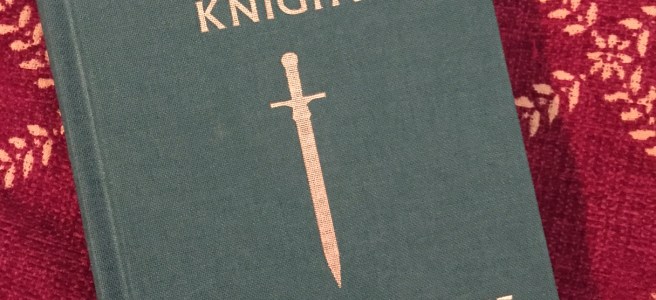
Written as a letter from a father, Ethan Hawke’s Rules for a Knight brings together the collected wisdom of sages as diverse as Peter Drucker, Nelson Mandela, Thich Nhat Hanh, and Julian of Norwich. Hawke surveys knightly virtues such as gratitude, courage, and discipline. What ties them together is the central story of a grandfather passing on wisdom to his children and the tight, unadorned prose he uses to capture his thoughts.
There’s a sense of respect and reverence that flows through these passages on chivalrous values. It’s a reverence for the virtues themselves and their role as the mortar of civilized society, but it’s a reverence also for the task of passing on knowledge from one generation to the next. The sacredness of this task is not lost on the father penning these pages. There is an awareness that to have lived the virtues is essential, but nearly as essential is to pass on the lessons of one’s life that are learned at the price of grief, pain, and sacrifice.

A particularly choice example of this is when Thomas (the father and knight) tells the story of how he came to love the children’s mother. It’s one of the most honest and candid accounts of true love in literature I can recall. He contrasts it with the fairytale romance of “falling in love” that so many stories exemplify, often imparting a faulty understanding of love. Thomas contrasts love with passion and spells out the key difference by illustrating it with a love story from his own life.
One of the unexpected benefits of Hawke’s approach with this book is an awareness of how the lessons we learn in our own lives build on those our elders have taught us. Over time, we extend the wisdom we have received from others through our own experiences. In turn, we then build on what we learned by passing it on to those who will live after us to continue to extend this collective wisdom with their own life lessons. Rules for a Knight contains many essential truths, but none more essential than the duty to share the lessons of our lives with future generations.
 book reading life