Radical Hospitality

St. Francis Church New Mexico

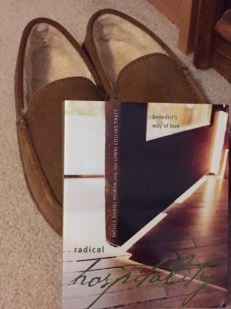
At its most basic, hospitality means saying “welcome in” to the friend and the stranger alike. This doesn’t mean you share the same intimacy with a stranger as with a friend. It only means you’re open to and grateful for the gift of discovering what any person has to offer no matter who they are. Father Daniel Homan and Lonni Collins Pratt unpack the virtue of hospitality and what it means today in Radical Hospitality: Benedict’s Way of Love. Their interpretation flows from the monastic spirituality of St. Benedict, who in his Rule of St. Benedict set the expectation that monks extend hospitality to others. Hospitality is for everyone, not just monks. While hospitality has become associated with hotels, tourism, and the business of keeping people entertained, the authors explain that it is about relationships. Hospitality expresses itself in relationships that start with gratefulness for the gift of encountering someone else instead of mistrust, suspicion, or – worst of all – the desire to use another as an instrument to our ends.
Radical Hospitality Homan and Pratt
Radical Hospitality: Benedict’s Way of Love


Stories abound in  holy texts, especially those passed on by desert people (like the Bible or the Qur’an), of the importance of hospitality. It was a life or death matter for travelers in earlier eras. And in many parts of the world or in the case of refugees fleeing their home countries, it is still a matter of life and death today. Even outside of these dire circumstances, the spirit of hospitality calls us to a more authentic way of relating to each other. We can choose to see in other people a grace that we admire, a skill we share, or a virtue we seek. So often when we search for the good in others, we find it in ourselves. When we focus on the evil, it appears in us too. Perhaps in learning hospitality toward others, we learn to live with ourselves. We learn to accept our faults when we can more tolerably overlook the faults of our fellow travelers. Through hospitality, we learn the courage to be kind – both to ourselves and those very different from us.

Even as we create a more technologically advanced world, we need to make it hospitable. We need to make it a fit place for spiritual beings to reside in. Sending an email, joining a video conference, or posting on someone’s website are the new ways we sometimes welcome others into our home or enter as strangers into someone else’s. Technology makes us more accessible to each other through communication tools. Consequently, we have to make sure that when we access each other we do so in a way that is humane and hospitable. Sending and receiving information has never been so easy, but it has probably never been so difficult to maintain the level of hospitality required. I am grateful to Homan and Pratt for the depth of their study of hospitality and the accessible way in which they communicate it in Radical Hospitality. At its most basic, hospitality means saying “welcome in”- easier to say about your house than about your heart.

 

Nuns Rule

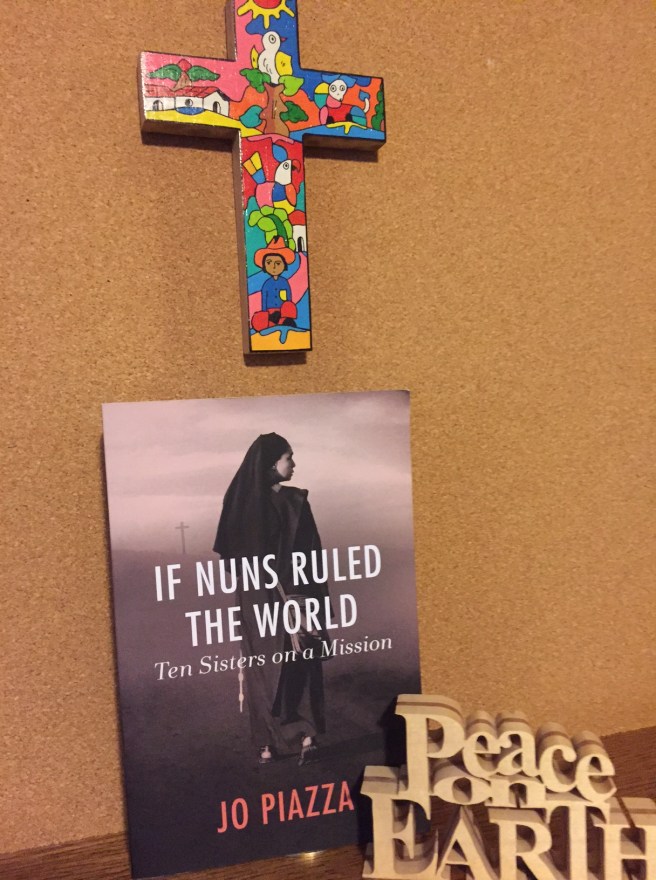
Forget what you think you know about nuns and the role of women in the Catholic Church. Jo Piazza’s If Nuns Ruled the World: Ten Sisters on a Mission serves up ten profiles in courage that will alter your perception of Catholic religious women. Leaders and activists, the American women Piazza profiles exemplify what it means to live out a commitment to social justice. Piazza shines a spotlight on the way each of these unique women carves out a niche within which she makes a remarkable contribution to the Church and the whole of American society.

Nuns_Ruled_World

To take one example, Sister Jeannine Gramick advocates for gay rights, including gay marriage. Often exposing herself to criticism and reprimands from other Catholic leaders, Sister Jeannine promotes dialogue, outreach, and advocacy for a more inclusive Church and society that embraces gay men and women in the totality of who they are in relationship to one another. The seedling of her calling to this mission grows from meeting a handsome gay man at a party one night. What then starts as a home ministry blossoms into a full-blown organization, and eventually multiple organizations. Sister Jeannine’s courage to promote gay rights and establish a connection to and from a Catholic community from which gay people have been alienated is, for her, all part of the Christian mission to bring God’s children together in love.

Sister Tesa Fitzgerald founded Hour Children to help women in prison connect with their children while they serve out their sentences.  Sister Simone Campbell assumes the unenviable task of taking Catholic social justice issues to the sources of America political power. Meanwhile, Sister Nora Nash bellies up to power brokers of the corporate variety as an activist investor of sorts. What they all have in common is the capacity to defy any stereotypical or popularized version of what it means to live their vocation as religious women. They have chosen to model self-gift. By taking their individual gifts and gifting them back to a culture in which they often represent the counterculture, they have shown us a way of Christian living as old as Christianity itself.

As individuals working independently and as kindred spirits working collectively to shape a more inclusive America, the nuns profiled in this book give witness to living a contemplative life that is active in the world. They are examples of modern heroism and evidence of the spiritual riches that come from meaningful work. They may not generate the kind of wealth that accrues on balance sheets, but the value they create and the dividends they generate grow the common good.

Knights Rule

Written as a letter from a father, Ethan Hawke’s Rules for a Knight brings together the collected wisdom of sages as diverse as Peter Drucker, Nelson Mandela, Thich Nhat Hanh, and Julian of Norwich. Hawke surveys knightly virtues such as gratitude, courage, and discipline. What ties them together is the central story of a grandfather passing on wisdom to his children and the tight, unadorned prose he uses to capture his thoughts.

There’s a sense of respect and reverence that flows through these passages on chivalrous values. It’s a reverence for the virtues themselves and their role as the mortar of civilized society, but it’s a reverence also for the task of passing on knowledge from one generation to the next. The sacredness of this task is not lost on the father penning these pages. There is an awareness that to have lived the virtues is essential, but nearly as essential is to pass on the lessons of one’s life that are learned at the price of grief, pain, and sacrifice.

RulesforaKnight

A particularly choice example of this is when Thomas (the father and knight) tells the story of how he came to love the children’s mother. It’s one of the most honest and candid accounts of true love in literature I can recall. He contrasts it with the fairytale romance of “falling in love” that so many stories exemplify, often imparting a faulty understanding of love. Thomas contrasts love with passion and spells out the key difference by illustrating it with a love story from his own life.

One of the unexpected benefits of Hawke’s approach with this book is an awareness of how the lessons we learn in our own lives build on those our elders have taught us. Over time, we extend the wisdom we have received from others through our own experiences. In turn, we then build on what we learned by passing it on to those who will live after us to continue to extend this collective wisdom with their own life lessons. Rules for a Knight contains many essential truths, but none more essential than the duty to share the lessons of our lives with future generations.

Love Dangerously

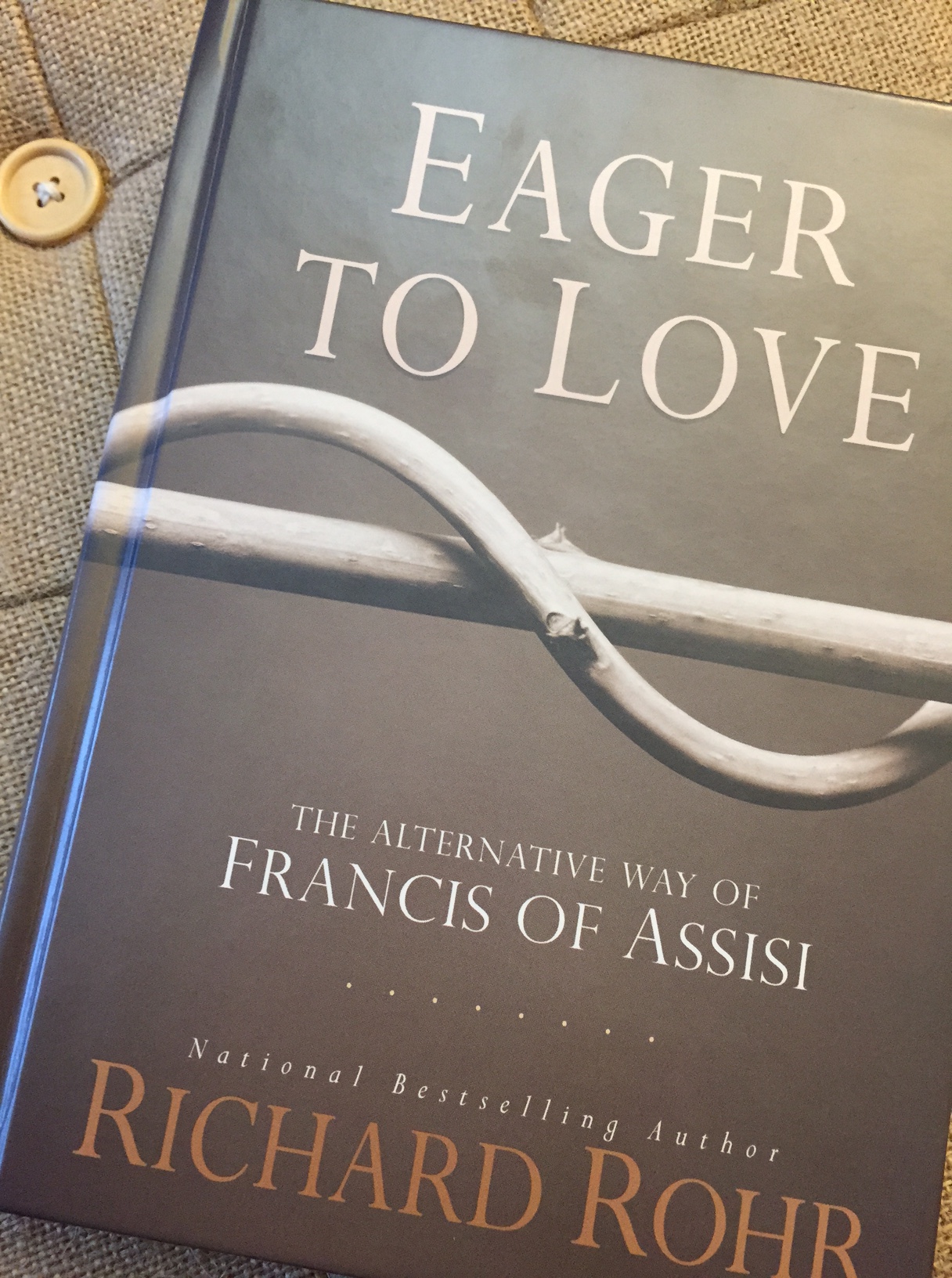
Reflecting on Eager to Love: The Alternative Way of Francis of Assisi by Richard Rohr

In an age with dating services like Ashley Madison, people seem to crave love, sex, and intimacy without risk. And yet, to love someone without the willingness to risk anything is a shriveled and shrunken kind of love. To love without risk to the self is not only cowardly, but not really even love at all. If love involves placing another before oneself, this kind of self-centered love that characterizes our age is more akin to mutual vanity – like two people sitting across from one another, each looking

Eager to Love by Richard Rohr
Eager to Love: The Alternative Way of Francis of Assisi by Richard Rohr

in a mirror. The illusion of mutuality is there, but love is surely not.

Nothing could be further from the love that shone forth from St. Francis. His was a love that took vulnerability to a level of Christ-like magnanimity. So overflowing and energetic was his love that I think it would be difficult for us moderns to recognize it. If exhibited today by a stranger or even a friend, we might mistake it for something contrived. Certainly, we would think, such love as this is much too raw to be real. It’s too faithful to be believed. It can’t possibly be authentic. Such is our depravity that we would mistake the naked face of love for a mask.

Richard Rohr does a tremendous job bringing the texture of Franciscan love alive for the contemporary reader. Rather than use Francis as a prop for some social or political thesis, Rohr places Francis before the reader and then surrounds him with the people, concepts, images, and experiences that all bear the mark of this saint’s particular manner of living. St. Bonaventure, John Duns Scotus, Pope Francis, and St. Clare contribute to Christianity in no small way and in no way without their relationship to Francis. Each influenced and was influenced by the Franciscan spirit. Francis’s way of relating to God through contemplation and simplicity constitutes less of a “path” or spiritual school of thought, and more of a disposition of heart.

The Franciscan way of downward mobility runs counter to notions of success in society as much in this age as in the age in which Francis lived, but Francis and his spiritual partner, Clare, resided outside systems and inside an ethic of service. The gift of their poverty was generosity. The more they renounced, the more they had to bestow. St. Francis and St. Clare together transcribe the teachings of Jesus, not with ink but with action. It always seemed odd to me that St. Clare would serve as the patron of television, a medium for which I always thought she’d have little use if she were alive today. Now I think that it’s the fact she’d have no need of it that makes her its perfect patron. Like love, it’s best when a screen isn’t something we turn on so as not to feel alone. Like love, media serves us better when it’s something we don’t consume lest it consume us in the process. Like love, it serves a higher aim than self-stimulation or it only serves to diminish oneself.

Love is never holy as an abstraction alone, teaches Francis. When he addresses the cosmic Christ, he does so as Brother Sun and Sister Moon; Brother Wind and Sister Water; Brother Fire and Sister Bodily Death. In doing so, he brings home the specificity of the holy. Nature doesn’t water down divinity to the Franciscan because it isn’t general, but richly painted in vivid detail and bursting with a radiant individuality. Holiness is naturally no less specific for being shared, just as God’s love is no less passionate for it’s being poured out equally upon all people. As Rohr says, “Religion’s primary and irreplaceable job is to bring this foundational truth of our shared identity in God to full and grateful consciousness.” It’s impossible not to hear this statement as a challenge to all contemporary religious leaders who, in an effort to exercise influence, sacrifice love on the altar of orthodoxy.

Modern Western men and women are eager to love in many ways, but lack of a true conception of what loving means leads them astray. Francis reminds us that even a true concept of love isn’t enough, as the truth of love bears itself out in the living of it. Love is embodied or it ceases to be. Love demands Incarnation. Is it no wonder, then, that the Christian tradition owes so much to the Little Poor Man of Assisi?