Nuns Rule

Forget what you think you know about nuns and the role of women in the Catholic Church. Jo Piazza’s If Nuns Ruled the World: Ten Sisters on a Mission serves up ten profiles in courage that will alter your perception of Catholic religious women. Leaders and activists, the American women Piazza profiles exemplify what it means to live out a commitment to social justice. Piazza shines a spotlight on the way each of these unique women carves out a niche within which she makes a remarkable contribution to the Church and the whole of American society.
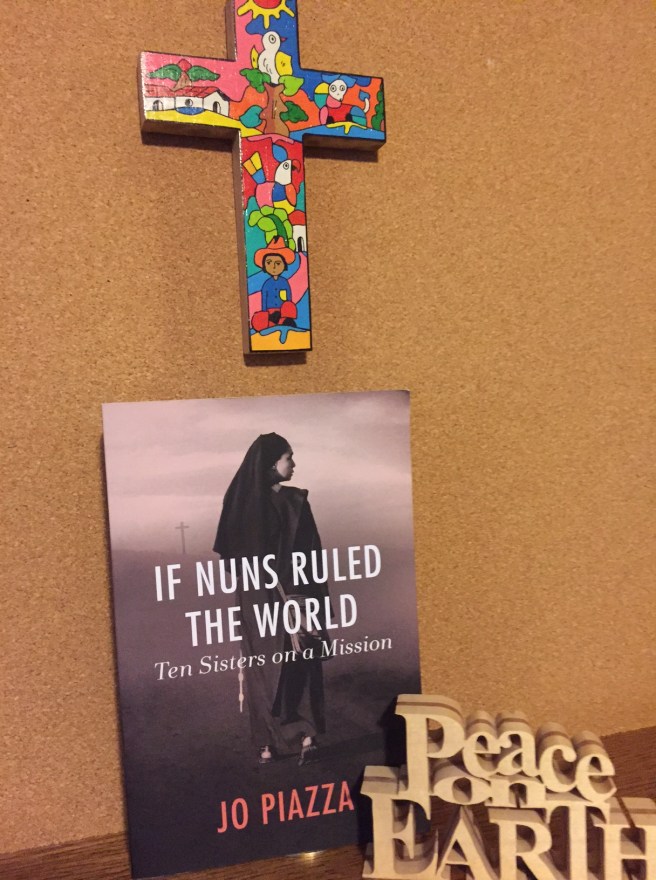
Nuns_Ruled_World

To take one example, Sister Jeannine Gramick advocates for gay rights, including gay marriage. Often exposing herself to criticism and reprimands from other Catholic leaders, Sister Jeannine promotes dialogue, outreach, and advocacy for a more inclusive Church and society that embraces gay men and women in the totality of who they are in relationship to one another. The seedling of her calling to this mission grows from meeting a handsome gay man at a party one night. What then starts as a home ministry blossoms into a full-blown organization, and eventually multiple organizations. Sister Jeannine’s courage to promote gay rights and establish a connection to and from a Catholic community from which gay people have been alienated is, for her, all part of the Christian mission to bring God’s children together in love.

Sister Tesa Fitzgerald founded Hour Children to help women in prison connect with their children while they serve out their sentences.  Sister Simone Campbell assumes the unenviable task of taking Catholic social justice issues to the sources of America political power. Meanwhile, Sister Nora Nash bellies up to power brokers of the corporate variety as an activist investor of sorts. What they all have in common is the capacity to defy any stereotypical or popularized version of what it means to live their vocation as religious women. They have chosen to model self-gift. By taking their individual gifts and gifting them back to a culture in which they often represent the counterculture, they have shown us a way of Christian living as old as Christianity itself.

As individuals working independently and as kindred spirits working collectively to shape a more inclusive America, the nuns profiled in this book give witness to living a contemplative life that is active in the world. They are examples of modern heroism and evidence of the spiritual riches that come from meaningful work. They may not generate the kind of wealth that accrues on balance sheets, but the value they create and the dividends they generate grow the common good.
Pro Programming

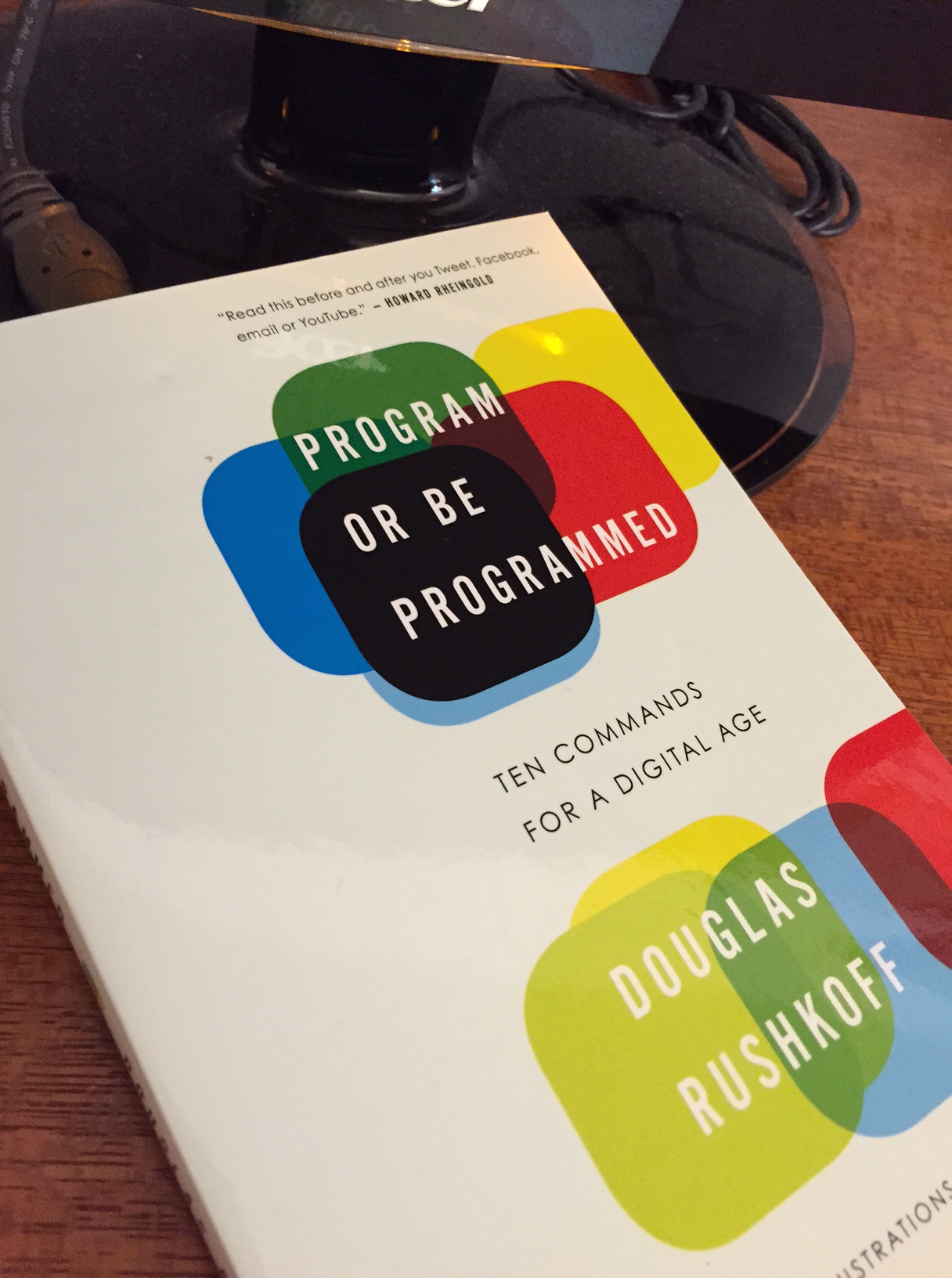
Analyzing the book Program or Be Programmed: Ten Commands for a Digital Age by Douglas Rushkoff
Program or Be Programmed by Douglas Rushkoff
Program or Be Programmed: Ten Commands for a Digital Age by Douglas Rushkoff

Computer literacy is a prerequisite to full participation in digital society. In Program or Be Programmed, Douglas Rushkoff explains why mere computer skills aren’t enough to become a shaper of the future we will live in, or even to influence the present shape of things as they are today. Our lives run in part according to processes and systems driven either wholly or in large part by the way in which software is designed. In both subtle and obvious ways, the choice architecture underpinning processes we participate in every day is guided by unseen hands that programmed how they would work. This happens every time an automated resume screening tool parses data and sifts through applicants before their submission makes contact with a human. It happens when the store of our choice (online or physical) decides what targeted discounts to pitch us for our next visit. It also happens when an algorithm determines search results or when its not-so-distant cousin offers up the next potential life partner or sex buddy via electronic matching services.

None of this is arguably good or bad, but someone’s deliberate thinking made it so. Programs function the way they do by someone’s design. Some of the consequences are intended, while a great many of them aren’t. We can either passively live at the mercy of these important, living operating systems or we can actively shape their design ourselves. But to shape them, we must learn to program or learn enough about programming to influence what gets programmed by others.

One step we can take besides sitting down to learn Python, C++, Swift, or Ruby (which certainly doesn’t hurt) is to study the values of the age of programming. By doing so, we can reset some of the terms by which we live our lives and determine the extent to which technology influences us, our habits, and our value systems. I’ll only focus on a couple here, but all ten of those Rushkoff discusses in Program or Be Programmed are worth considering.

Choice

Digital programs often force binary choices that implicitly limit choices where no such limitation truly exists. Rushkoff rightly points out that we often have a much broader array of choices than the program, bounded by the imaginary limits of its author, offers. And, even more powerfully, we have the power not to choose at all. We can decline a false choice about even such fundamental notions as race, gender, age, political affiliation, or religious belief. Our choices are of our own choosing and need not be determined by programming not of our own making.

Identity

Anonymity comes easy on the Internet. I can present the mask I want people to see. This can cut us off, Rushkoff warns, from being fully present in so much interaction that takes place via digital media. It’s easier to depersonalized and distance myself from the human impact when I don’t face the person. I must claim my identity and bear it openly for my digital communication to mean anything. “Nothing is perfect unless it is personal,” G.K. Chesterton once wrote in The Everlasting Man. Perhaps nothing is perfectly personal, but it must be personal to mean something.

Perhaps an Intention

Humans are the only creatures we know of that participate in their own evolution as a species. Can we do less than participate fully in the design of the programming that shapes the evolution of our culture? Can we do less than apply our personal understanding of the range of choices that ought to be part of the future humankind builds? Can we not see that to get on with programming ourselves is preferable to going along with the program?