
Invisible: A Memoir by Hugues de Montalembert
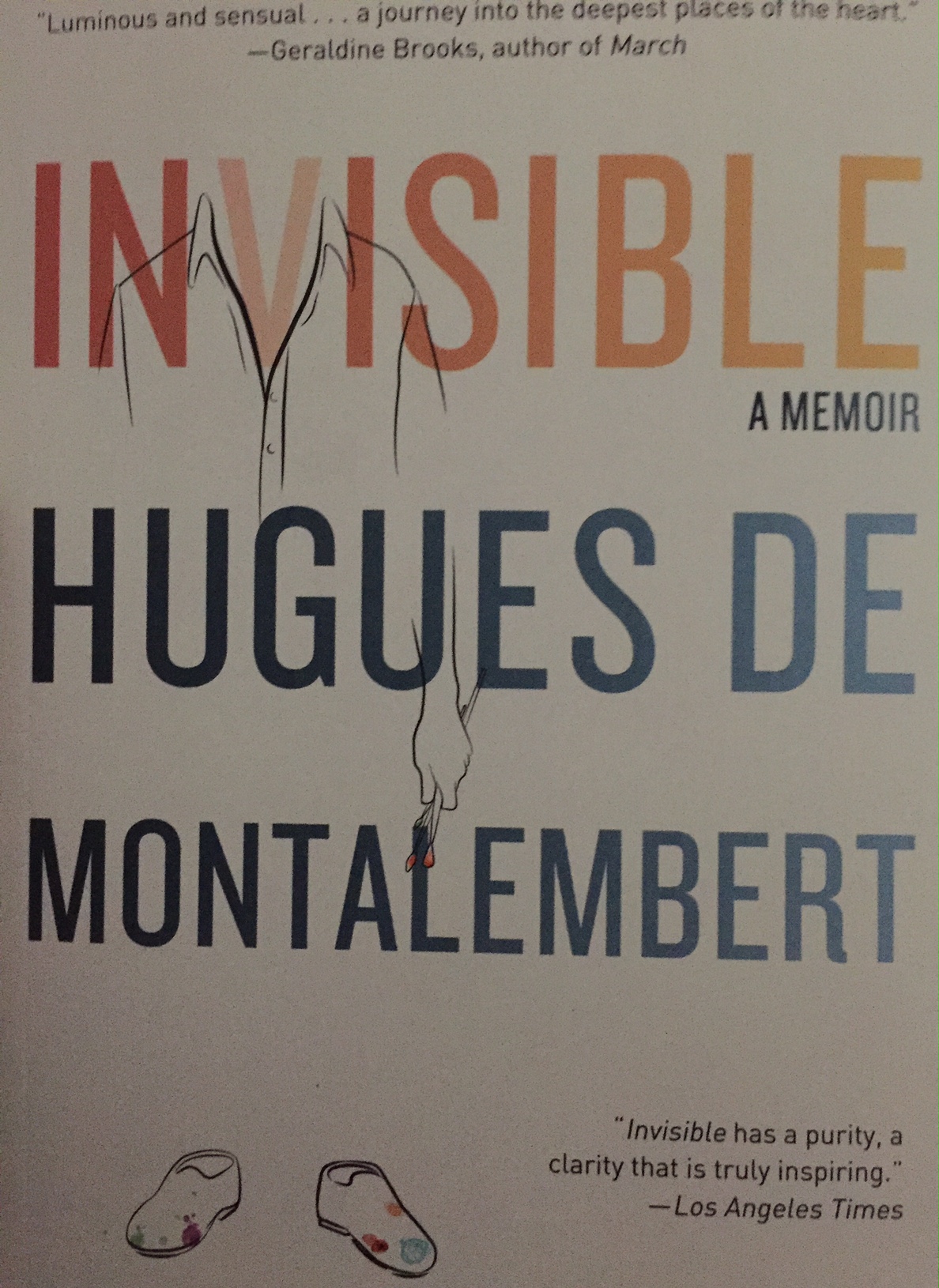
Sight, like all senses, is seldom savored except in its absence. What it means to go suddenly and inescapably blind is the subject of Invisible by Hugues de Montalembert. One night Hugues loses his sight at the hands of criminals who invade his home. A painter and filmmaker, Hugues wakes in a hospital the next day to find he’s bereft of the sense most useful to him as a visual artist. Almost as though it’s trying to compensate, his brain tries to replace the lost vision with images cobbled together from memory and the faintest of visual stimuli. Even when sight is diminished to nothing, our minds seek meaning from the glimmers between shadows. But when despair would strike, a darkness of the mind clouded everything. I got the sense it was the inner confrontation rather than the external limitations on the physical senses that zapped the bulk of de Montalembert’s energy as he works to recreate his changed life.
Searching for meaning is as core a part of this book as it is a core part of human life. The searching takes on a different character and urgency as a result of the sudden blindness, but the search itself is universal. We are either helped or hindered by the personal resources we have to invest in the search, as well as the energy we put in. When we bump up against boundaries and limits that discourage us, we have to seek a way to overcome them. Hugues fights fiercely for independence and pushes the limits imposed by caregivers, medical experts, blind peers, and his own psyche. His struggle may echo setbacks we’ve experienced and from which, even though we may recover, we are never the same again. And nor would we spend much time desiring that if we want to improve our situation. Pragmatism wins out to prevent emotional collapse.
Ultimately, it’s a radical move that saves the author. He travels across the world alone. Never more fearful, he departs his home to see the world from his new vantage point. Venturing into the unknown, the known comes into sharper relief. Ingenuity comes out of necessity. Learning goes faster because the hurdles come quicker with no hiding place or comfort zone to retreat to. The author describes writing so long his pen runs out of ink and of course he doesn’t know it when it happens. He writes a whole day with no ink. He has nothing to show for his day’s work, but he had written the words and formed the thoughts by his own hand. Writing it is, even if no writing is left behind.
What constitutes “seeing” and what constitutes “not seeing”? “Vision is a creation,” Hugues writes. Based on that, the meaning of seeing remains invisible and we can only know it when we see it – when we see. Not so with not seeing. Seeing only what is readily apparent at first sight is the same as not to see.

 book reading life